Showing posts with label history. Show all posts

Saturday, January 28, 2012

26 January 1885- Khartoum


On this day, 127 years ago, Sudan became independent for the first
time as Khartoum was freed from the grip of British and Egyptian
forces after a battle known as the battle of Khartoum.

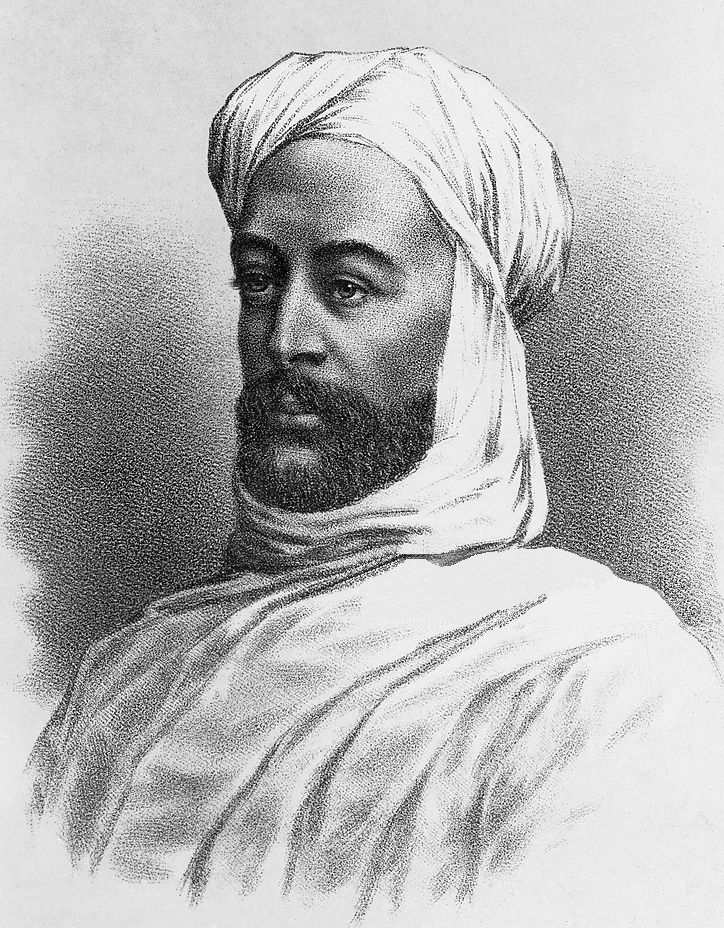
The liberators were the Mahdist Sudanese army led by Muhammad
Ahmad (Al Mahdi), Sudan's first contemporary leader.

Sudan's history shows that many powerful kingdoms and one of the
oldest civilizations in the world were born in Sudan. Egypt's rival in
Africa, Nubia, was powerful for thousands of years, but it had become
a weak kingdom by the end of the 18th century. So did the kingdom of
Sennar which ruled a large part of Central Sudan and spread into Chad
and other countries.The collapse of powerful kingdoms in Sudan
attracted the Ottomans who invaded Sudan and annexed it into the
Ottoman empire in 1820.

In 1881, the Sudanese rebelled against the Ottoman administration and
Sudan became independent, but the British were eyeing the country at
the time.

The British invaded Sudan in 1882, but they didn't govern it until
1899 when they finally defeated the Mahdist forces.

Charles "Chinese" Gordon who was a famous figure in England was
brought over from China to gain control of Sudan. He cited the
founding of an Islamic state at the hands of the Mahdi as a reason for
the need to invest in defeating the Mahdist army.

Gordon believed that he can accomplish this mission, however, the
Mahdi army proved to be strong and sieged the city of Khartoum from
March 1884 to January 1885.

The siege was brutal that it caused the food supply in Khartoum and of
Gordon's garrison to run low. The entire garrison was killed and
Gordon was shot and his head cut-off.

Muhamed Ahmad became the ruler of Sudan , but he died 5 months after
the battle , however, a modern Sudan was born.

In late 1898, in another attack led by Lord Kitchener, the Mahdist
army were defeated in what came to be known as the battle of Omdurman.

The battle of Khartoum became popular as it was chronicled in the 1966
film, Khartoum, and in the novel "Desert and Wilderness" by Polish
Nobel Prize winner Henryk Sienkiewicz.

Friday, April 15, 2011

History lesson: The Funj Sultanate

One of Sudan’s greatest kingdoms was born when the Funj, an ethnic group from South Sudan was forced to flee a rivaling ethnic group, the Shilluk.

Their destination was Sennarwhere they established the Funj Sultanate of Sennar , also known as the Blue Sultanate. They single-handedly ruled this area of Sudan for a number of centuries until their fateful collapse in 1821.
In the 15th century, the arrival of Amara Dunqas and his subjects put the Funj on the map. Dunqas defeated Abdallah, the ruler of the empire previously situated in Sennar.

At the time of its establishment, the sultanate practiced Animism and Christianity. In 1523, Islam became the religion of the monarchy, however, some aspects of previous religions and beliefs were incorporated into the newly-adopted religion.
As the kingdom grew stronger and expanded its control to Gezira, Southern Kordofan and other regions, it became a direct threat to the growing Ottoman influence in the region and the neighboring state of Ethiopia. Until the 1810s, the kingdom was home to the largest army in East Africa, stationed at garrisons and ready to fight the surrounding enemies. Clashes with the Shilluks continued until an unlikely agreement was forged as an attempt to unite against the Dinka, the largest Southern Sudanese tribe.

The kingdom started declining in the 17th century as sultans fought over power. In 1821, Sennar was incorporated into Anglo-Egyptian Sudan and this was the final end of the Funj Sultanate.

Badi V11 was the last ruler of the kingdom. He couldn’t resist the Ottomans, as the kingdom was already too weak to fight off foreign invaders.....

Sunday, September 2, 2007

Parts of Kizzie's diary:- Where are you dear cousins?

July 2003-

3 days after my uncle's wedding.

We ae still celebrating and I still didn't wear half of the dresses I purchased for this wedding.

My mother walks in, she looks concerned and exhausted.

Mother:- He is gone, her son just disappeared. They can't find him anywhere.
Kizzie:- Who are you talking about? Who disappeared?
Mother:- you know my mother's cousin called today and she said her son just walked out and didn't come back...it's been 2 days. You know her..Her name is A, she is B's sister.
Kizzie:- ok...calm down..did I ever meet him? god mother! your family is sooo large, I have like 1 trillion cousins.
Mother:- They said they looked for him everywhere, his dad is still looking but they can't find him....dress up, we are going to her place right now
Kizzie:- mother, they just can't look for him everywhere, they should tell the police..I know they are useless but you never know. Did they contact his friends?
Mother:- they did, I have a feeling there is a story behind this....dress up..

We visit his family... his mother looks 60(she was in her early 40's) and his dad is still driving around Khartoum looking for him n everybody is depressed.

Kizzie to her sister:- God, they should stop this crap...the guy is not dead yet!
My aunt:- well if he was dead, it was going to be way better..at least they know he is dead! Now, we don't know if he is dead or alive.

I walked over to his mother and told her *He is going to come back * and asked for his picture. She went inside and came back with a passport picture. He looked my age.
When she asked me how old I am, I found out he is my age.

July 2005:-
It's been two years.

God, please make him come back. We could've started university together. We could've been really good friends. I don't' know. I don't know. I just wish I had the chance to get to know him better.

Relative:- so ..did A' Son come back yet?
Kizzie:- No, it's been two years. Everybody looked for him. My cousins drove around Khartoum looking for him. We did everything.
Relative:- I don't think he is still in Sudan...I'm sure they trained him in Sudan but he is abroad now
Kizzie:- what? where did he travel? what training? khalto S. what are you talking about?


To be continued

ps:- Thanks for inspiring me SudanReturnee:)

Thursday, August 23, 2007

Darfurian Diaries: Contested Identities

“Sudan is an arab country and whoever doesn’t feel Arab should quit” Ali Abdel Rahman, first minister of interior
In the 1980’s, the Arab gathering, the first organization or group to harbor racist arab ideologies was formed.
They distributed cassettes and pamphlets arguing that the blacks ruled Darfur long enough and now it was time for the Arabs to rule. People ignored them for a while.

Things started happening. People were killed.

"Fight-or lose your land and be destroyed" Musa Hilal-leader of Janjaweed and a member of the Arab Gathering.

In 1982, a market near Awal was attacked. People were separated according to their tribe.
The Arabs had the chance to leave unharmed but the non-Arabs were brutalized. Other attacks were carried out as well; the victims were always “Non-Arabs”.

In 1987, the Arab gathering wrote a letter to the president asking him to stop neglecting the Darfur Arabs. They argued that they are the majority and they should rule Darfur.
This is how the letter ended. Threatening?
“Should the neglect of the Arab race continue, and the Arabs be denied their share in government, we are afraid that things may escape the control of wise men and revert to ignorant people and the mob. Then there could be catastrophe, with dire consequences. ” (De Waal)
They were honest.

Note:-I’m guessing the president didn’t; take their letter seriously because a Fur was assigned governor of Darfur after this letter.
The Arab gathering decided to take action. Qoreish 1 (a group with similar ideas)
was born out of the Arab gathering.
They had 2 immediate goals
1- Cripple the new non-Arab governor’s regional government
2- Recruit volunteers to create problems between black tribes.
-This was a battle plan for the Janjaweed.
In the late 1990’s, their plan was expanded and it was published in more detail. The date for completing this plan was 2020.

As some of you know, the name Qoreish is the prophet’s tribe. They chose this name because they believe that they (The Baggara Arabs)are descendants of the prophet’s tribe. This supposedly gives them the right to rule Muslim lands. Their ancestors crossed from Libya to Darfur a long time ago and they should rule from the Nile to Lake Chad.

Darfurian Diaries:- very brief history of Darfur

Very brief History of Darfur, enough to understand the history of the conflict.

It’s common knowledge that Darfur has one of the longest histories of human existence in the Sudan. Some time before carnage and inequality became the new law of order; Darfur was peaceful and ruled by sultans who exchanged letters with Napoleon and traded with Egypt.

Ethnic division
Like many parts of Sudan, Darfur is home to many ethnic groups.
The Africans are divided into two groups:-
1-settled groups such as the “Fur”, the largest African ethnic group.
2-Non settled ones such as the Zaghawa
Notes:-
Dar means homeland and fur refers to this ethnic groups. Darfur takes its name from this ethnic group. There also other African tribes such as the Zaghawa etc..

Arabs arrived in Darfur between the 14th and 18th century, they are also divided into two groups
1-traders who arrived from the East and the West
2-Juhaynas who arrived from the North-West.
Juhayna Arabs: - a group of people who trace their lineage to the prophet’s tribe (Qoreish)
Juhayna Arabs fall into two groups:-
Baggara (cattle herders/cattle-people) or Abbala or (Camel-men)
Note:-
The Fur sultans granted land to the Baggara however, the Abbala were not given any land. This is how they believe they are involved in the conflict now. They’ve been looking for land for the past 250 years.

Marginalization of Darfur
Surprisingly, Darfur wasn’t only marginalized by current Sudanese governments, the underdevelopment and marginalization of Darfur started from the colonial times.
Developing Darfur was not considered until 1945.
“The file economic development, Darfur province in the Khartoum national archives, contains just five entries for the entire period 1917-50” (De Waal)

Education was limited to the children of local chiefs.
The governments of Sudan continued neglecting Darfur after independence. There was no investment in Darfur whatsoever. Healthcare facilities and Education didn’t improve much.
Many promises were dishonored.

Water and migration
Water in Darfur is scarce. Lake Chad is drying up at an alarming rate and every season, tribes such as the Baggara migrate south to spend the long summer.
Note: - It is believed that they used to take back slaves and stolen cattle with them back in the days.
In the autumn, the Baggara escape African Sleeping Sickness and heavy rains and go to the North. If they found African tribes there, they sometimes pay them to stay in their land but sometimes fighting is better than paying.

In the next part, I will explain
1- How the Darfur conflict is not entirely restricted to Sudan, it involved and still involves Chad, Libya and other countries
2- The conflict didn’t really start in 2003

How Libya and Chad are involved
After Chad got its independence from France, they were under the leadership of Francis Tombalbaye, a president mostly hated by the Chadian Muslims for his policies and dictatorial rule.
After the civil war started in Chad, the Sudanese and the Libyans supported Hissene Habre to become the next president of Chad. Habre was Muslim and possibly Arab. According to Sudan and Libya, he was the perfect candidate.
The Americans and the Egyptians also provided military and financial support to Habre. The Sudanese provided him with lands in Darfur for training his army which was made up of Chadians and Sudanese. Habre took over the capital and the late Tombalbaye (who was removed in a coup d’état earlier) had nowhere to go but the Sudan. During the years of civil war and insurgency in Chad, unthinkable amounts of arms were smuggled to the Sudan. Most of the arms stayed in Darfur.
Like all the borders in Africa, the Chadian-Sudanese border is porous. Refugees crossed the borders freely and arms crossed even more freely.
Clashes between tribes especially settled (mostly Fur) and unsettled tribes (mostly Arabs) were common. Instead of fighting with knives or even rifles, they now had Kalashnikovs. The Arab tribes armed themselves. The age-old conflicts involving land and water started becoming more intense and bloody.
After supporting Habre, Sudan and Libya decided they don’t like him after all. In 1975, Libya invaded Chad and Libyan troops fought Chadian troops for the next 10 years or so. The military aid given to Chad by the United States and France was used to win the war against Gaddafi’s Libya. The Sudanese government supported Libya’s war against Chad. They didn’t provide military or financial aid but they just gave Libya the permission to use Darfur as a “rear base”.
Many lives were lost in the following years because of this stupid move.
“Thousands of Islamic legion troops and Chadian Arabs crossed the desert to Darfur. Given the increasing local tensions, this sparked a conflagration in Darfur: an Arab-Fur war between 1987 and 1989 in which thousands were killed and hundreds of villages burned” (De Waal)
The civil war started.

Darfur Civil war (1987-1989)

The civil war in Darfur was simply tribal conflicts. Arms were still being smuggled from Chad and it was fought during the second Sudanese civil war.
The government decided to take advantage of the Arabs in Darfur and started arming them. This was primarily to help them fight the wars they waged against the South but it was used for the internal conflicts too.
For example: - In 1987, Arab militia from the Baggara tribe killed and burned over 1,000 dinka’s in “El-Daíen”. They were heavily armed from the government to fight the SPLA and their supporters (the 1,000 innocent people they killed I suppose!).

Note: - about a month before the Islamist regime/National salvation government took over the country, peace talks ended the civil war in Darfur. Not once and not for all.

Deby’s Chad
In 1990, Chad was close to having a new president. Idriss Deby(an ethnic Zaghawa, one of the largest tribes in Darfur).
For the tenth time, Darfur was being used as a training area for training Deby’s men and rearming them. Libya and Sudan armed Deby’s new group, The Patriotic Salvation.

“Khartoum assisted him by remobilizing 1,200 Chadian Arabs militia, and France looked the other way. In December, Deby counterattacked and swiftly occupied N’Djamena”. (De Waal)

Years later, Chad and Deby will be part of the picture again.

Kalashing the famine
“The Kalash brings cash, without a kalash you’re trash”
In 1990, the price of a Kalashnikov in Darfur was 40 dollars.

In the late 80’s, Darfur made headlines when it was hit by a horrible drought resulting in a famine.
There is an untold story about the famine. Darfurians weren’t only starved, they were also robbed. Arms were smuggled from Chad or handed out by Libya. The political instability in Chad leaked through the porous Chadian-Sudanese border in the form of “Armed Robberies”.
Sadly, tribes participated in this (especially settled ones). The arms intensified small tribal conflicts over water (a scarce source in Darfur).

References :):-
Darfur: A Short History of a long War, Alex De Waal and Julie Flint
Notes from Darfur, my father personal diary from his work in Darfur (I lived 6 months in Darfur)
Covering Darfur (Arabic book) Ibrahim Al-Sadiq Ali attia