Last week, the South Sudanese army entered Higleig, an area in Sudan's South Kordofan state and took total control of it and still controls it as we speak even though Sudan's army claims to be "20 km" and " a few hours" away from "liberating Higleig".
Surely, every Sudanese person was quick to condemn the SPLM for occupying Higleig and they have the right to, since Higleig , as far as we know, is part of Sudan (even though if the citizens of South Kordofan were given the right to hold a self-determination referendum, they would gladly want to become part of South Sudan).
I think before we quickly decide to side with the Sudanese government and the national army for their attempts at taking back a piece of our territory, we should try to understand why this happened in the first place.
-For weeks, the Sudanese air forces bombed Bentiu, the capital of Unity state in South Sudan. As much as they deny it, there is solid proof that they did. hmmmmm....Why would they do that? I think they were just trying to provoke the SPLM. If this is the case, then lets try to understand why.
-As the SPLM was moving towards Higleig, the army forces stationed there were communicating with the leadership of the army and updating them on the situation. The leadership in Khartoum refused to give the forces in Higleig the green light to take action. So, they just sat there and did nothing , until they clashed with the SPLM. I'm not saying that the forces there were powerful enough to stop the advancing SPLM forces, but why were they stopped from taking action?
Jihad Comes to Town
The call for Jihad is everywhere in Khartoum and it is sickening. In newspapers, you see the adverts and you also see posters around the city. Students affiliated with the ruling party are even beating students at universities into submission to... Jihad. (side note: Shouldn't one actually want to go to Jihad? When did Jihad become by force?)
The GOS knows very well that Sudan can not afford this war. The country is drained and it turns out that after South Sudan seceded with 80% of Sudan's oil revenues, the government doesn't have a Plan B. Just ask them about agriculture and they wouldn't even know what to say.
But the point is, the GOS has one aim in life- to stay in power- and it it would do anything to remain in power and this is where it all starts to make sense.
When you are losing popularity and your people can't stand you and are blaming you for everything ( increasing prices/ expensive houses etc), you need to get them on your side. If you can't get them on your side, why not use the "patriotism" card?
And it is working on some level. In the sense that we are all condemning it and supporting the government in their attempts at reclaiming back our "occupied lands" !!!!
On another note, I don't remember South Sudan ever making noise about "Higleig" being part of South Sudan before…why now? Abyei was always contested between the two countries, but Higleig was not. The two countries even went to court over Abyei.
The thing is, South Sudan is pissed off. They shut down their oil production to piss off Sudan because they can not agree on oil transit fees and they will never agree as long as Sudan is asking for so much money.
Higleig is where most of Sudan's oil comes from , so why should Sudan have a stable oil supply while South Sudan can not?
I have so many questions *sigh*

"Sudan is not really a country at all, but many. A composite layers, like a genetic fingerprint of memories that were once fluid, but have since crystallized out from the crucible of possibility" Jamal Mahjoub, a Sudanese novelist
Showing posts with label sudan. Show all posts
Showing posts with label sudan. Show all posts
Wednesday, April 18, 2012


Tuesday, April 17, 2012
Call for JIHAD on South Sudan by PDF

I found this gem in a Sudanese newspaper a few days ago. I was shocked and stopped spending one pound on this newspaper that I always had reservations about. What a discussing piece of crap!
Just in case you don't know, the Popular Defense Forces (PDF) is a retarded force initiated by the current Sudanese government during the Sudanese civil war.
It is looking to expand its force by recruiting "jihadists" and if you decide to join, they promise you a pledge with "martyrdom"!
Where is Salah Gosh
Rumors about Gosh been circulating in Khartoum for a long time. Some say Gosh is detained in Kober prison. Some say he was murdered in cold blood. Some say he is in Ethiopia planning a coup. Some say he is under house arrest. The question remains: Where is Salah Gosh? Gosh is the former head of the notorious National Intelligence and Security Services (NISS). In fact , he created this institution and presided over it at a critical time. Thousands were killed and tortured under his watch and he personally interrogated some known activists who know him as Salah "Fourth Floor".
Sunday, April 15, 2012
40 days ago, Awadia Ajabna was killed by Sudan's police

Last week, the death of Awadia Ajabna, a young woman living in Al-Daim shook Khartoum and the entire country as her relatives and angry youth took to the streets and protested. In a country where human life is cheap and 1.5 million died in the civil war and hundreds of thousands died in Darfur and otherplaces, it was interesting to see how one woman managed to capture the attention of a capital where the majority are apathetic to the suffering in the Sudan outside Central Sudan.
Why did Awadia Ajabna become a national cause even more than the Manasir protest that went on for over 100 days?
Its surely not because she is a celebrity. Awadia worked in a kindergarten and came from a family that hails from the embattled Nuba Mountains, a periphery within a periphery. Two years ago, she ran in the national elections to represent Al Daim, the neighborhood she lives in, as part of the Sudanese National Labour Party. She was loved by her family and respected by her neighbors, but the way she died became the main source of anger and frustration.
According to her sister, the Public Order Police were patrolling the neighborhood. This police force is notorious and is known for using vague laws to extort money from men and women , they are despised in Sudan. Their main aim is to fight social corruption and they can arrest women for "indecent" clothing and men suspected of consuming alcohol.
Naturally, the meaning of indecent clothing is unclear and it is based on the opinion of the arresting officer. As they patrolled next to the Ajabna house, they stopped her brother and accused him of being drunk. He was allegedly speaking on the phone and they most probably wanted to bully him into taking his phone as a compromise. The brother in question argued with them when things heated up, the police forces retreated , but came back larger in number and armed. It remains unclear whether they raided the house, but what we are sure of is that Awadia was shot in the middle of a chaotic situation where a number of officers opened fire on her family and neighbors who are unarmed civilians.
She was killed by the public order police forces. When someone is shot in the head, you can not but say that this was a deliberate act.
Today, Amal Abbas, the veteran journalist and editor, writes in Al-Sahafa that " it is not strange that a civilian dies in front of her house in light of a regime that for two decades has enabled the culture of war and incriminated the other especially women in the practices of the public order police,"
It is also not strange that the public order police is armed. For years, it has degraded women in Sudan by restricting their dress and appearances in the public life and subjected them to public lashings. In 2010, right before the international day for human rights, a video appeared of a woman being lashed, violently.
Toni Morisson, who won the Nobel Prize in Literature, wrote in Newsweek Magazine, that she has seen "many instances of human brutality, but this one was particularly harrowing."
Morisson went on to describe how proud the woman in this video made her feel. She wrote "after each cut of the lash into your flesh, you tried to stand; you raised your body up like a counter-whip. It so moved me to see your reactions; I interpreted them as glimmers of hope, of principled defiance."
Only two years ago, the public order police killed another woman. Nadia Saboon, a simple tea lady was trying to make ends meet in a market in Khartoum. The public order police attacked the tea sellers and poor traders in the area in what is described as a "sweep". She ran for her life, but fell onto a metal stake and bled to death. Saboon died , but her story was not as publicized as Awadia's ordeal.
The difference is, this is the first documented time the public order police kills a woman in the safety of her house, in her comfort zone.
Awadia's death inspired many protests. For days, youth protested on Sahafa street and inside Al-Daim. They held banners saying that "Awadia is a matryr. They said they want retribution.
Protestors burned the public order police station in Al-Daim. They say that Ethiopians and tea ladies living there are particularly happy as the police officers working there used to blackmail them and subject them to humiliating abuses.
The area was turned into a military zone. Police cars and trucks full of armored police officers caught my attention on my way to the funeral.
The tear-gas was very intense inside alleys. People in Al-Daim say that an old grandmother died as a result of the intense tear-gas. A young girl studying at Sudan University called Omnia is currently being hospitalized as the tear gas bomb hit her on the head during the protest.
I'm particularly fond of Amal Abbas's daily column a few weeks ago, she ended it by saying that " let the events of Al-Daim be a trigger towards total change."
Friday, April 13, 2012
Khartoum panics over fuel shortage fears

Published @ http://bit.ly/IimoIl
The impact of current hostilities between Sudan and South Sudan are becoming manifest in Khartoum with residents panicking over possible fuel crisis.
Vehicle owners and operators formed a bee line at petrol stations Friday, to replenish their supplies ahead of envisaged shortage.
However, the government said that Sudan had enough oil to cover its needs for months to come, adding that there were functioning oil fields inside the country other than Heglig, which South Sudan had taken control of.
The oilfields of Heglig produce about half of Sudan's total supply.
The Ministry of Petroleum said that Sudan had 10,000 tones of gasoline in storage and had taken all measures to cope with a war scenario.
Similarly, the Governor of Khartoum State, Mr Abdel-Rahman Al-Khider, has asked mosque officials (imams) to use Friday sermons to reassure civilians that their welfare would be guaranteed despite the conflict.
Meanwhile, Sudan Government has accused the opposition parties and movements of masterminding the long lines at petrol stations to create panic, by urging their members to queue at the retail outlets.
Vice-President Al-Haj Adam told the opposition parties that" they will always find petroleum available even if they want to drink it or use it to burn themselves".
South Sudan announced Thursday that it had shut down oil production in Heglig, while Khartoum said it had sufficient oil supplies for its citizens.
Published: Juba and Khartoum defiant over Contested Territory
South Sudan President Salva Kiir. FILE | AFRICA REVIEW |
By MACHEL AMOS in Juba and REEM ABBAS in Khartoum
Posted Thursday, April 12 2012 at 15:05 @ http://bit.ly/J6w2yr
The possibility of Sudan and South Sudan returning to war looked more real Friday as both sides remained defiant over a contested oil-rich region.
South Sudan President Salva Kiir ruled out withdrawal from Heglig, as Khartoum vowed to fight a "war of dignity" with the former to reclaim the lost territory.
South Sudan took control of Heglig from Sudanese forces on Tuesday in fresh clashes with the Khartoum Armed Forces.
The UN and the African Union have called for South Sudan's immediate withdrawal from Heglig.
President Kiir said Khartoum took it as a military weakness when he ordered the troops to refrain from overrunning Heglig last month.
It was not. But we always believed that everything could be resolved by peaceful means, President Kiir stressed.
This time, I said that I would not order the forces to withdraw, said the President, amid applause from a packed House.
He said the decision was not because South Sudan was interested in war, but only wanted to resolve the problem once and for all.
In Khartoum, the minister for Defence, Mr Abdel-Rahim Mohamed Hussein, said that the conflict was part of a plot to "overthrow the regime".
"Taking over the oil-fields is the first step, to be followed by taking over a key town in Southern Kordofan, then taking over Khartoum," he told parliament.
Heglig is part of South Kordofan State where a rebellion against the Khartoum government has raged since last June.
However, the area was also contested with South Sudan because the latter believed that in the 1956 border demarcation, Heglig was part of its Unity State.
Sudan denies the claims and has vowed to reclaim what it considers to be occupied territories.
UN Secretary General Ban Ki Moon, in a phone call on Wednesday, urged President Kiir to order his forces to withdraw immediately.
The UN Secretary General gave me an order to immediately withdraw from Heglig. I said I am not under your command, Kiir said, attracting applause.
Withdraw troops
President Kiir accused UN and the international community of being unfair in handling the matters between the two neighbouring states.
Whatever aerial bombardments were being conducted in South Sudan were a violation of our sovereignty. When we report them to the international community, they don't take it as something that concerns them, President Kiir said, arguing that whenever Juba took a step in self-defence, it became a matter of international concern.
"You are not doing justice to all of us," said the South Sudan leader.
"You want to see justice done to Sudan and not South Sudan, and this is unfair."
President Kiir also warned that if his Sudan counterpart Hassan Al-Bashir did not withdraw troops from Abyei, despite international calls to do so, Juba would reconsider it position and possibly return to the contested region.
Meanwhile, Sudan intensified aerial bombardments on Thursday, dropping four rounds of bombs in Bentiu, the capital of Unity State.
Unity State Information minister Gideon Gatpan said a SAF warplane hovered over the area in the morning and dropped the bombs on Rubkona County.
He said the target was oilfields. The army spokesman, Col Philip Aguer, confirmed the bombing, accusing Sudan of provoking a meaningless fighting.
Sudan TV stated Wednesday in a news broadcast that many youths had come forward to join the armed forces to get back their country's lost territory.
In another development, a Sudanese parliamentarian has donated $374,000 (1 million pounds) to support the war efforts against South Sudan.
Sudan has filed a complaint against South Sudan at the UN Security Council and asked the Security Council to pressure Juba into retreating from its territory.
"Sudan has full rights in international law and UN documents to respond to this attack on Sudan's peace and unity," said Khartoum's UN ambassador Dafallah Al-Haj Ali
A presidential aide, Mr Abdel-Rahman Al Mahdi; said that "Sudan will not fold its hands while Heglig is occupied and will work to get back its territories that were raped as an act of self defence".
By MACHEL AMOS in Juba and REEM ABBAS in Khartoum
Posted Thursday, April 12 2012 at 15:05 @ http://bit.ly/J6w2yr
The possibility of Sudan and South Sudan returning to war looked more real Friday as both sides remained defiant over a contested oil-rich region.
South Sudan President Salva Kiir ruled out withdrawal from Heglig, as Khartoum vowed to fight a "war of dignity" with the former to reclaim the lost territory.
South Sudan took control of Heglig from Sudanese forces on Tuesday in fresh clashes with the Khartoum Armed Forces.
The UN and the African Union have called for South Sudan's immediate withdrawal from Heglig.
President Kiir said Khartoum took it as a military weakness when he ordered the troops to refrain from overrunning Heglig last month.
It was not. But we always believed that everything could be resolved by peaceful means, President Kiir stressed.
This time, I said that I would not order the forces to withdraw, said the President, amid applause from a packed House.
He said the decision was not because South Sudan was interested in war, but only wanted to resolve the problem once and for all.
In Khartoum, the minister for Defence, Mr Abdel-Rahim Mohamed Hussein, said that the conflict was part of a plot to "overthrow the regime".
"Taking over the oil-fields is the first step, to be followed by taking over a key town in Southern Kordofan, then taking over Khartoum," he told parliament.
Heglig is part of South Kordofan State where a rebellion against the Khartoum government has raged since last June.
However, the area was also contested with South Sudan because the latter believed that in the 1956 border demarcation, Heglig was part of its Unity State.
Sudan denies the claims and has vowed to reclaim what it considers to be occupied territories.
UN Secretary General Ban Ki Moon, in a phone call on Wednesday, urged President Kiir to order his forces to withdraw immediately.
The UN Secretary General gave me an order to immediately withdraw from Heglig. I said I am not under your command, Kiir said, attracting applause.
Withdraw troops
President Kiir accused UN and the international community of being unfair in handling the matters between the two neighbouring states.
Whatever aerial bombardments were being conducted in South Sudan were a violation of our sovereignty. When we report them to the international community, they don't take it as something that concerns them, President Kiir said, arguing that whenever Juba took a step in self-defence, it became a matter of international concern.
"You are not doing justice to all of us," said the South Sudan leader.
"You want to see justice done to Sudan and not South Sudan, and this is unfair."
President Kiir also warned that if his Sudan counterpart Hassan Al-Bashir did not withdraw troops from Abyei, despite international calls to do so, Juba would reconsider it position and possibly return to the contested region.
Meanwhile, Sudan intensified aerial bombardments on Thursday, dropping four rounds of bombs in Bentiu, the capital of Unity State.
Unity State Information minister Gideon Gatpan said a SAF warplane hovered over the area in the morning and dropped the bombs on Rubkona County.
He said the target was oilfields. The army spokesman, Col Philip Aguer, confirmed the bombing, accusing Sudan of provoking a meaningless fighting.
Sudan TV stated Wednesday in a news broadcast that many youths had come forward to join the armed forces to get back their country's lost territory.
In another development, a Sudanese parliamentarian has donated $374,000 (1 million pounds) to support the war efforts against South Sudan.
Sudan has filed a complaint against South Sudan at the UN Security Council and asked the Security Council to pressure Juba into retreating from its territory.
"Sudan has full rights in international law and UN documents to respond to this attack on Sudan's peace and unity," said Khartoum's UN ambassador Dafallah Al-Haj Ali
A presidential aide, Mr Abdel-Rahman Al Mahdi; said that "Sudan will not fold its hands while Heglig is occupied and will work to get back its territories that were raped as an act of self defence".
Friday, April 6, 2012
Sudan Youth Skip the Party
Unlike youths his age in other countries, 21-year-old Hamid Khalafallah, who lives in Khartoum, does not attend house parties.
"You never know when the sweep will strike," says the Sudanese Engineering student.
Sweep, also known as kasha in Sudan, are regular operations carried out by a special force called the Public Order Police to arrest beer drinkers and those engaging in 'other immoral acts'.
The force is a well-oiled state machinery that fights corruption of morals.
Launched after the current government came to power in a bloodless coup in 1989, the force is spread across the country.
From arresting "indecently dressed women" to cracking down on mixed sex house parties and tea ladies in markets, the public order forces use vague laws and their right to arrest and try the accused on the spot.
Even though Khalafallah has never been arrested at a party, he, just like most of his peers, was aware of the risk. He says that the "sweep" happens at least once a month.
A 19-year-old student, who calls himself DJ Biggie, has a different experience. He began partying four years ago and has been arrested several times.
Recently, while at a party in Riyadh, a suburb of Khartoum, the Public Order Police emerged and arrested him together with other guests.
"I was lucky I knew someone who could get me out before I was tried and fined," he recalls.
Although he was roughed up on the way to the police station, he was later freed. His friend wasn't as lucky.
"When they arrested my friend, they beat him really bad and shaved off his dreadlocks," says DJ Biggie.
Siha, a regional organisation working on women's issues, explains that the Public Order articles of the 1991 Sudanese criminal code emphasised "restrictions on women’s dress, conduct and manner of social interaction".
International attention
In 2009, a Sudanese journalist Lubna Hussein made international headlines and inspired a nationwide campaign against the Public Order laws when she refused to receive "40 lashes" for wearing indecent clothing.
Ms Hussein was arrested in a cafe while she was attending a concert along with other girls. And the arrests continue.
Recently, a crackdown by the same police force on a private party in an apartment in Khartoum led to the trial of a number of youth for adultery.
M.M.A, a youth activist who followed the case, observed that the Public Order laws were so flawed that the youth chose to be tried for adultery and get lashed instead of the actual crime they were accused of. His full name cannot be revealed for fear of reprisals by the force.
"Initially, they were arrested for the intention to commit adultery, even though it was just a party. Such a charge would send them to prison for a month and require them to pay a hefty fine, so they chose the easier way out," he said.
The easier way out was to be tried for adultery.
During the same week,, a young woman, Ms Awadia Ajabna, was shot dead by the Public Order Police forces after they accused her brother of consuming alcohol.
Ms Ajabana was caught up in the middle of the chaos.
Her death inspired a wave of condemnation against the police force that many hope will stop their arbitrary arrests and mistreatment.
published @ http://www.africareview.com/Special+Reports/Sudan+youths+keep+off+parties+to+beat+Public+Order+Police/-/979182/1366408/-/aoom0l/-/index.html
"You never know when the sweep will strike," says the Sudanese Engineering student.
Sweep, also known as kasha in Sudan, are regular operations carried out by a special force called the Public Order Police to arrest beer drinkers and those engaging in 'other immoral acts'.
The force is a well-oiled state machinery that fights corruption of morals.
Launched after the current government came to power in a bloodless coup in 1989, the force is spread across the country.
From arresting "indecently dressed women" to cracking down on mixed sex house parties and tea ladies in markets, the public order forces use vague laws and their right to arrest and try the accused on the spot.
Even though Khalafallah has never been arrested at a party, he, just like most of his peers, was aware of the risk. He says that the "sweep" happens at least once a month.
A 19-year-old student, who calls himself DJ Biggie, has a different experience. He began partying four years ago and has been arrested several times.
Recently, while at a party in Riyadh, a suburb of Khartoum, the Public Order Police emerged and arrested him together with other guests.
"I was lucky I knew someone who could get me out before I was tried and fined," he recalls.
Although he was roughed up on the way to the police station, he was later freed. His friend wasn't as lucky.
"When they arrested my friend, they beat him really bad and shaved off his dreadlocks," says DJ Biggie.
Siha, a regional organisation working on women's issues, explains that the Public Order articles of the 1991 Sudanese criminal code emphasised "restrictions on women’s dress, conduct and manner of social interaction".
International attention
In 2009, a Sudanese journalist Lubna Hussein made international headlines and inspired a nationwide campaign against the Public Order laws when she refused to receive "40 lashes" for wearing indecent clothing.
Ms Hussein was arrested in a cafe while she was attending a concert along with other girls. And the arrests continue.
Recently, a crackdown by the same police force on a private party in an apartment in Khartoum led to the trial of a number of youth for adultery.
M.M.A, a youth activist who followed the case, observed that the Public Order laws were so flawed that the youth chose to be tried for adultery and get lashed instead of the actual crime they were accused of. His full name cannot be revealed for fear of reprisals by the force.
"Initially, they were arrested for the intention to commit adultery, even though it was just a party. Such a charge would send them to prison for a month and require them to pay a hefty fine, so they chose the easier way out," he said.
The easier way out was to be tried for adultery.
During the same week,, a young woman, Ms Awadia Ajabna, was shot dead by the Public Order Police forces after they accused her brother of consuming alcohol.
Ms Ajabana was caught up in the middle of the chaos.
Her death inspired a wave of condemnation against the police force that many hope will stop their arbitrary arrests and mistreatment.
published @ http://www.africareview.com/Special+Reports/Sudan+youths+keep+off+parties+to+beat+Public+Order+Police/-/979182/1366408/-/aoom0l/-/index.html
Wednesday, March 7, 2012
Silenced Before you Speak
A few hours ago, I went to an event about political detainees in Sudan at the Sudanese Monitor for Human Rights, an independent venue where the National Consensus (the coalition that brings Sudanese opposition parties together) holds its event and press conferences.
The event was organized by the National Consensus and the speakers were Mr. Kamal Omer-a well-known lawyer and leading figure in the Popular Congress Party (PCP), Eng. Khalid Omer Yousif- a leading member in the Sudanese Party and blogger and Professor Mohamed Zain Al Abdeen, a politician and university professor released on Monday after being held by the National Intelligence and Security Services (NISS) for ten days.
First, we were informed that Professor Al Abdeen could not make it because the Press and Publications security called him and asked him to come for a meeting at 12 p.m. I believe the NISS was mainly trying to sabotage the event by making sure that one of the speakers, a valuable speaker, can not make it to the event.
I arrived early and I was sitting opposite a man wearing a safari suit. I have this theory that most young men wearing safari suits work for the NISS. He was wearing a blue safari suit and he looked out of place. Turns out.....naturally, he does work for the NISS.
He asked one of the organizers about the "main organizers" of this forum , then, he left when he was not given a definite answer. Another NISS officer came back a few minutes later and asked Mr. Kamal Omar, the lawyer and well-known opposition figure to step outside.
We all jokingly told Mr.Omar " you will get arrested,"
Mr. Omar came back and said, we can't have this forum here.
I was very disappointed and angry, we didn't even start the forum and they are canceling it!
We decided that we have to find a way to hold this event and headed to the Sudanese Communist Party as its a few minutes away from the Monitor.
We ended up having the event at the Communist Party headquarters.
The event was organized by the National Consensus and the speakers were Mr. Kamal Omer-a well-known lawyer and leading figure in the Popular Congress Party (PCP), Eng. Khalid Omer Yousif- a leading member in the Sudanese Party and blogger and Professor Mohamed Zain Al Abdeen, a politician and university professor released on Monday after being held by the National Intelligence and Security Services (NISS) for ten days.
First, we were informed that Professor Al Abdeen could not make it because the Press and Publications security called him and asked him to come for a meeting at 12 p.m. I believe the NISS was mainly trying to sabotage the event by making sure that one of the speakers, a valuable speaker, can not make it to the event.
I arrived early and I was sitting opposite a man wearing a safari suit. I have this theory that most young men wearing safari suits work for the NISS. He was wearing a blue safari suit and he looked out of place. Turns out.....naturally, he does work for the NISS.
He asked one of the organizers about the "main organizers" of this forum , then, he left when he was not given a definite answer. Another NISS officer came back a few minutes later and asked Mr. Kamal Omar, the lawyer and well-known opposition figure to step outside.
We all jokingly told Mr.Omar " you will get arrested,"
Mr. Omar came back and said, we can't have this forum here.
I was very disappointed and angry, we didn't even start the forum and they are canceling it!
We decided that we have to find a way to hold this event and headed to the Sudanese Communist Party as its a few minutes away from the Monitor.
We ended up having the event at the Communist Party headquarters.
Sunday, March 4, 2012
Concern as Sudan Parliament debates espionage laws
Published @http://www.africareview.com/News/Concern+as+Sudan+debates+espionage+laws/-/979180/1333338/-/127wk61z/-/index.html
An attempt to introduce tougher espionage law in Sudan is causing jitters among activists, opposition politicians and journalists.
The law, currently before parliament, is seen as an attempt to further muzzle the freedom of the press in a country whose freedom rakings are already bad.
"Before, the case was against me and the security apparatus, now the public opinion will be involved and it will be galvanised against the so-called 'spies', " said a veteran journalist and activist who wished to remain unnamed.
A few months ago, Mr Ahmed Ibrahim Al Taher, the head of the Parliament, stated that there were many spies in the country, especially in the media sector. Since then, some MPs, encouraged by the National Intelligence and Security Services (NISS), have pushed for a tougher espionage law.
The political section of Kober prison, Sudan's largest and most high-security prison, is reported by former detainees to be full of political inmates, especially opposition party members, students and youth activists.
Experts are warning that journalists and activists would face bigger risk if the law was passed.
The security organ
However, government officials have stated that the law was necessary because of the current situation to protect the country from activities in neighbouring states
Mr Abdelmoniem Mohamed, a lawyer actively involved with youth groups, said that the laws were born out of the regime's failure to solve the many economic, political and social problems arising in Sudan, especially since the Arab Spring waves in neighbouring countries.
An attempt to introduce tougher espionage law in Sudan is causing jitters among activists, opposition politicians and journalists.
The law, currently before parliament, is seen as an attempt to further muzzle the freedom of the press in a country whose freedom rakings are already bad.
"Before, the case was against me and the security apparatus, now the public opinion will be involved and it will be galvanised against the so-called 'spies', " said a veteran journalist and activist who wished to remain unnamed.
A few months ago, Mr Ahmed Ibrahim Al Taher, the head of the Parliament, stated that there were many spies in the country, especially in the media sector. Since then, some MPs, encouraged by the National Intelligence and Security Services (NISS), have pushed for a tougher espionage law.
The political section of Kober prison, Sudan's largest and most high-security prison, is reported by former detainees to be full of political inmates, especially opposition party members, students and youth activists.
Experts are warning that journalists and activists would face bigger risk if the law was passed.
The security organ
However, government officials have stated that the law was necessary because of the current situation to protect the country from activities in neighbouring states
Mr Abdelmoniem Mohamed, a lawyer actively involved with youth groups, said that the laws were born out of the regime's failure to solve the many economic, political and social problems arising in Sudan, especially since the Arab Spring waves in neighbouring countries.
Saturday, February 18, 2012
Rest in Peace, Mohamed Wardi

I always find hard news hard to digest. I just had to write a blog post about this. The legend, the emperor, the number one musician in Sudan, Mohamed Wardi, has passed away after chronic kidney problems.
Wardi was born in Sowarda in Northern Sudan in July 1932 and was raised by his uncle as he became an orphan at an early age. Before he established himself as a musician, he was a teacher in a number of Sudanese cities.
He moved to Khartoum in 1957 and began a music career that spanned over 55 years.
In the beginning of his career, Wardi performed in the Nubian language , however, he was advised to perform in the Arabic language to attract the non-Nubian Sudanese audience.
His popularity knew no borders, his songs and concerts were best-sellers in Egypt , Ethiopia and many African countries.
Wardi cared for Sudan and was imprisoned and exiled for many years for opposing numerous dictatorships in Sudan.
During the war with South Sudan, he joined the Sudan People's Liberation Movement and performed in SPLM-controlled camps. He will be remembered for patriotic songs such as Ya Baladi ya Haboub, October Al Akhdar among others.
Amazing songs:
اليوم نرفع راية إستقلالنا - محمد وردي
http://www.youtube.com/watch?v=ut0-LOl1j0U
Friday, February 17, 2012
Youth groups pressure Sudan government over rape and torture

Last January, as South Sudanese overwhelmingly voted for secession, what remained of Sudan was going through political and social transformation. There had been small-scale protests since the government of Omar Al Bashir, a military dictatorship, took over in June 1989 but January 2011 was different.
Not only did the 2011 protests call for change, they also encompassed a wider range issues affecting the Sudanese public.
When youth movements began emerging in 2011, they attracted the upper middle class, a section of society that had earlier distanced itself from the national issue and politics.
In December 2010, the Tunisian revolution took off and the government was overthrown, the following month calls on social media websites such as Facebook for change were getting louder in Sudan. As the revolution was unfolding in Egypt,the calls for mass protests became heard.
The protests were led by youth groups, notably Girifna (We are Fed Up) and Youth for Change (known as Sharara). Girifna was founded in late 2009 and was mobilizing the public against the ruling party before and during the Sudanese elections in April 2010.
It was founded by students and young activists who were fed-up with the government and wanted change. From day one, Girifna called for the overthrow of the Sudanese government through peaceful and non-violence means. The group communicates at the grass root level through public debates and events and also in the virtual world through its Facebook groups, twitter, Youtube channels and a regularly updated website.
Youth for Change (also known as Sharara) began in 2010 and has gained popularity through its heavy online presence and organizing the January 2011 protests known as the “2011 revolution protests”.
One of their Facebook events for the protest managed to attract over 10,000 youth.
H.K, a young university student joined the Jan 30 protest.
“I took food and clothes with me in a bag and put them in the trunk of my car, I was prepared to stay the night, we wanted it to become a Tahrir square,” said H.K
There were ongoing changes on the meeting points as organizers chose streets instead of a big square like Jackson square which made protestors an easier target as police forces surrounded them and blocked side streets. Amnesty international said that at least 150 protestors were arrested.
Many youth were detained for a few days to about two weeks. Some reported torture and even sexual assault at the custody of the police forces.
A young activist arrested in Khartoum North in January 2011 reported beatings, electrocutions, sleep deprivation and other horrendous forms of torture. He was kept there for nearly 50 days and came out with a chronic back injury and complaints about his knees.
In mid-February as other protests were taking place in Khartoum and its twin cities, Safia Ishaq, a young female activist affiliated with Girifna was kidnapped by a number of men and taken to one of the security services premises.
In a case that has received public outcry, Ishaq released a testimony that was published in late February last year. She states that she was gang-rapped by three security men who also beat her, insulted her and later dumped her on the side of a road.
She recorded a video where she told her story and subsequently became the first Sudanese woman to publicly come out and speak about sexual assault by the Security organ. The video has attracted over 100,000 views so far. After the incident, Ishaq had to flee Sudan as the security service was looking for her for speaking out against the sexual assault.
Girifna continue to raise the issue of rape of Ishaq and call for justice for all sexual violence that has been committed by Sudanese security forces against many Sudanese women.
“A year ago, a young Sudanese woman was violated and many more women were silenced through fear of sexual assault. Many people stood by her side and continue to face consequences for that,” read a statement from the the group, “we will never forget Safia. We will continue to peacefully resist the current regime and after Sudan’s revolution, we will push for a fair investigation and hold her rapists accountable”
Girifna has also petitioned the government of Sudan over detentions of activists affiliated to their group. Most youth activists are being held incommunicado for weeks and in some cases months.
In January 2012, at least 10 activists from Girifna and Youth for Change were arrested and detained from a few days to up to two weeks. Other students and youth activists such as Taj Al Sir Gaafar, Muhammed Idris Jeddo and Ibrahim Majzoub remain in detention since December 2011.
published @ http://ch16.org/2012/02/13/youth-groups-pressure-sudan-government-over-rape-and-torture/
Sudanese activist admitted to hospital in critical condition
Ibrahim Ali Majzoub, a 25-year-old Sudanese activist with the Girifna (We are Fed Up) movement and the Democratic Unionist Party, has been transferred from Kober Prison in Khartoum North, to a hospital nearby, said a family friend.
Mr Majzoub was arrested in early January by the National Intelligence and Security Services (NISS) while addressing a crowd over Manasir displacement issue at Wadi Al Neel University in River Nile State, some 300km from Khartoum.
He was detained before being transferred to Kober where he was neither charged nor tried.
"His parents went to the hospital to visit him and his mother could not recognise him," said a family friend who requested to be identified only by initials R.S.
Girifna, a youth group he is involved with, found out that he had an appendix operation while in detention and had been in pain since the operation.
He was currently at the NISS organ's hospital and was reportedly in a critical condition.
Another youth activist, Taj Al Sir Gaafar, also affiliated with the Girifna and opposition party Haq, was on day five of his hunger strike.
Gaafar was protesting his detention since December 30 last year, without a trial.
Civil resistance
A student of University of Khartoum, Gaafar mobilised over 10,000 colleagues in a protest and subsequent sit-in which led to the closure of the university late December.
Another youth activist, Muhammad Idris Jeddo ,who formerly headed the Darfur Association of Students at the University of Khartoum, was also arrested last December.
Jeddo, whose detention sparked a protest inside one of the dorms, was held at Kober Prison pending trial or charges.
His friend, who requested not to be named, told the Africa Review that he was also kidnapped from a bus at gun point.
"When we asked about him, the security services told us that he will not be released until the protest at the University of Khartoum is called off," said the friend.
There has a crackdown on youth activists and students since December 2011 as a result of on-going protests at universities all over Sudan.
Youth activists have been more vocal in calling for regime-change and civil resistance in recent months in light of the Arab Spring in neighbouring countries.
Last week, six activists from Girifna were released after a two-week detention at Kober prison, following an event they organised to discuss the developmental and the human rights situation in eastern Sudan.
published @ http://www.africareview.com/News/Sudanese+activist+admitted+to+hospital+in+critical+condition/-/979180/1328832/-/lxdtcw/-/index.html
Mr Majzoub was arrested in early January by the National Intelligence and Security Services (NISS) while addressing a crowd over Manasir displacement issue at Wadi Al Neel University in River Nile State, some 300km from Khartoum.
He was detained before being transferred to Kober where he was neither charged nor tried.
"His parents went to the hospital to visit him and his mother could not recognise him," said a family friend who requested to be identified only by initials R.S.
Girifna, a youth group he is involved with, found out that he had an appendix operation while in detention and had been in pain since the operation.
He was currently at the NISS organ's hospital and was reportedly in a critical condition.
Another youth activist, Taj Al Sir Gaafar, also affiliated with the Girifna and opposition party Haq, was on day five of his hunger strike.
Gaafar was protesting his detention since December 30 last year, without a trial.
Civil resistance
A student of University of Khartoum, Gaafar mobilised over 10,000 colleagues in a protest and subsequent sit-in which led to the closure of the university late December.
Another youth activist, Muhammad Idris Jeddo ,who formerly headed the Darfur Association of Students at the University of Khartoum, was also arrested last December.
Jeddo, whose detention sparked a protest inside one of the dorms, was held at Kober Prison pending trial or charges.
His friend, who requested not to be named, told the Africa Review that he was also kidnapped from a bus at gun point.
"When we asked about him, the security services told us that he will not be released until the protest at the University of Khartoum is called off," said the friend.
There has a crackdown on youth activists and students since December 2011 as a result of on-going protests at universities all over Sudan.
Youth activists have been more vocal in calling for regime-change and civil resistance in recent months in light of the Arab Spring in neighbouring countries.
Last week, six activists from Girifna were released after a two-week detention at Kober prison, following an event they organised to discuss the developmental and the human rights situation in eastern Sudan.
published @ http://www.africareview.com/News/Sudanese+activist+admitted+to+hospital+in+critical+condition/-/979180/1328832/-/lxdtcw/-/index.html
University of Khartoum raid; Sudan govt takes suppression to new level

KHARTOUM: About 500 University of Khartoum students were beaten with batons, forced out of the dorms into police trucks and detained at 4 a.m today following a raid on the dorms. I received a message from a student activist and student from the dorm at 9 a.m. telling me that he was arrested and is kept at the Souq Mahali police station in Khartoum with friends.
Volunteer lawyers and activists are currently working on securing their releasing students on bail. Students could face charges ranging from “causing public nuisance” and “disturbing public safety” which they could be made to face in court. A lawyer has said that some students were released on bail, but it is still unclear whether they are able to go back to the dorms.
The Sudan government has been cracking down on activism on the university for a while. On 22 December 2011, at least 700 students from the University of Khartoum marched on a solidarity protest with Manasir students to protest the lack of action on the Manasir cause. The Manasir, an ethnic group from Northern Sudan, has engaged in a sit-in strike, 300 km from Khartoum since November 2011 to protest their displacement as a result of the Merowe Dam and the lack of compensation.
Peaceful student protestors faced a heavy crackdown from the police forces. At least 70 students were arrested as a result and dorms were vandalized and raided by police forces on that same day.
On Sunday, 25th of December 2011, Khartoum University students began a week-long protest and sit-in that attracted anywhere between 10,000 to 16,000 students to protest police brutality, the administration’s position on the police forces entering the campus and arresting students and they also demanded that students are compensated for loses.
The sit-in was organized and attracted a lot of support from students who united on a common cause. However, on Thursday the 29th of December, the university administration announced that it would suspend studies until further notice.
Consequently the authorities closed down the university and arrested student activists such as Taj Al Sir Gaafar and Muhammed Idris Jeddo on 30 December 2011. The students remain in detention. The University of Khartoum was instrumental in the 1964 and the 1985 revolutions in Sudan.
There has been shrinking space for freedom of expression since Arab Spring uprisings in neighbouring North African nations began in late 2010. The government of Sudan has tightened the noose on youth and opposition groups that are calling for change as well as cracked down on independent media. Since July 2011, 8 newspapers have been suspended by the security forces. Many opposition parties have members in detention.
Since early 2011 when the Arab Spring began, opposition groups have publicly called for regime-change as the only way forward for Sudan. President Bashir who heads the current ruling party, the National Congress Party, came to power in 1989 after staging a military coup and overthrowing a democratically-elected government. Since then, Sudan has been embroiled in violent conflicts.
The Manasir strike is one of the grievances that are uniting the Sudanese populace in their search fro reform
Published: Sudan continues crackdown on voices of dissent
Published @ http://ch16.org/2012/02/02/sudan-continues-crackdown-on-voices-of-dissent/
KHARTOUM : The National Intelligence and Security Services (NISS) arrested twelve youth activists from the popular groups, Girifna (We are Fed Up) and Youth for Change over the last week in the Sudanese Capital Khartoum. Other members of Girifna are reportedly being pursued by security officials.
There has been shrinking space for freedom of expression since Arab Spring uprisings in neighbouring North African nations began in late 2010. The government of Sudan has tightened the noose on youth and opposition groups that are calling for change as well as cracked down on independent media. Since July 2011, 8 newspapers have been suspended by the security forces. Only two English newspapers are surviving in Sudan as five newspapers were suspended after the South Sudan secession in 2011.
Some newspapers like Rai Al Shab and Ahjras Al Hurriya were suspended for their affiliation with opposition parties while others Alwan, an independent newspaper was shut down under unclear circumstances.
Many opposition parties have members in detention. Dr. Bushra Gamar and Dr. Abdelmoniem Rahma, both from Sudan People’s Liberation Movement -North Faction (SPLM-N), a movement currently prohibited in Sudan, have been in detention since June and September, respectively.
Taj Al Sir Gaafar, a student at the University of Khartoum who belongs to the opposition movement, HAQ, has been in detention since December 2011. Calls for the release of the detainees have not yielded much action from President Omar Al Bashir’s government.
Since early 2011 when the Arab Spring began, opposition groups have publicly called for regime-change as the only way forward for Sudan. President Bashir who heads the current ruling party, the National Congress Party, came to power in 1989 after staging a military coup and overthrowing a democratically-elected government. Since then, Sudan has been embroiled in violent conflicts.
Currently Bashir’s government is fighting different rebel groups in different parts of the country. The government has also been accused of mismanaging billions of oil revenues. Sudan began exporting oil in the late 1990s, although a number of high-rise buildings were added to Khartoum’s skyline, little has changed for the majority of Sudanese citizens.
In January and February 2011 hundreds of Sudanese youth participated in an unprecedented wave of street demonstrations. It is estimated that at least 113 were arrested during those protests; some detainees including Girifna members reported abuse during detention. The youth were released, but some ahve reportedly been under surveillance after their release to monitor their political activities.
Khartoum has also seen protests against the alarming increase in commodity prices. The protests against high prices have spread to Kassala, a city in Eastern Sudan, where students held mass protests but faced a brutal crackdown far away from the national and international media eye.
In late 2011 there was a boycott on meat as people looked for different ways to beat the government crack down. Supermarkets that have previously had all products began stocking up on basic commodities and lessening their purchase of products now seen as luxury such as jam and tuna.
Sudan also faces continued protest by the Manasir, an ethnic group from Northern Sudan who have held a sit-in in River Nile State against displacement and lack of compensation as a result of the construction of the Merowe dam. The dam was built on Manasir land and directly displaced thousands of ethnic Manasir.
The government of Sudan defends the dam and is currently building two other controversial dams as an attempt to boost electricity supply to all parts of Sudan. Power cuts remain a daily reality for the 40 million citizens of Sudan. With all these protests the government has increased its highhandedness.
Students of Zalingei University (West Darfur) demonstrating in December 2010.
A Sudanese youth whom I spoke to but cannot mention because of their safety said they have been targeted.
” My friend and I ran out of his house when we noticed two cars parked outside. We ran down small alleyways while the cars tried to catch up with us,” said A.S who was forced to leave his house for security reasons on Friday. A.S also had to stop using his phone as it is bugged and could be used to track his movements.
Another female member of Girifna reported that her phone was bugged and her house is under constant surveillance by the NISS.
“When I went home after Wednesday’s event, I found an NISS vehicle and officers watching my house,” said R.S.
Members of the NISS are immune to trials and can detain activists for up to 9 months on the pretext of defending national security. Cases of torture were reported inside NISS premises, which are usually government-owned houses in residential neighborhoods.
This followed held on January 25 to commemorate the 7th anniversary of the Port Sudan massacre where at least 22 were killed and over 400 were injured following clashes between security and protestors asking for an end to the marginalization of Eastern Sudan. The event featured speakers from East Sudan to speak about the ongoing humanitarian crises and neglect there. Girifna has been working for change in Sudan since 2009.
All those detainees do not know their fate until a decision is taken by government and in some cases they are forced to sign documents promising to stop their political activities before release. In other cases, they have to go to court for charges ranging from public nuisance to conspiring against the state and cases usually drag on for a few months.
Commentators have asked when will the Arab spring reach Sudan, which is well, qualified looking at political and economic problems and ongoing humanitarian crises. The important question is not when the revolution will reach Sudan but in what form would it reach.
Last year, rebel groups from Darfur, South Kordofan and Blue Nile and even East Sudan joined forced and created the Sudan Revolutionary Front, which calls for an armed struggle to overthrow the government as an alternative. Although people in Central and Northern Sudan are keen on regime-change, there is still a divide between the advantaged Central and Northern Sudan and the marginalized other parts on how to bring about regime change.
Change in Sudan is inevitable, protests are ongoing but until Sudanese people from different groups unite, the government will continue to easily crash dissent and pit groups against others.
KHARTOUM : The National Intelligence and Security Services (NISS) arrested twelve youth activists from the popular groups, Girifna (We are Fed Up) and Youth for Change over the last week in the Sudanese Capital Khartoum. Other members of Girifna are reportedly being pursued by security officials.
There has been shrinking space for freedom of expression since Arab Spring uprisings in neighbouring North African nations began in late 2010. The government of Sudan has tightened the noose on youth and opposition groups that are calling for change as well as cracked down on independent media. Since July 2011, 8 newspapers have been suspended by the security forces. Only two English newspapers are surviving in Sudan as five newspapers were suspended after the South Sudan secession in 2011.
Some newspapers like Rai Al Shab and Ahjras Al Hurriya were suspended for their affiliation with opposition parties while others Alwan, an independent newspaper was shut down under unclear circumstances.
Many opposition parties have members in detention. Dr. Bushra Gamar and Dr. Abdelmoniem Rahma, both from Sudan People’s Liberation Movement -North Faction (SPLM-N), a movement currently prohibited in Sudan, have been in detention since June and September, respectively.
Taj Al Sir Gaafar, a student at the University of Khartoum who belongs to the opposition movement, HAQ, has been in detention since December 2011. Calls for the release of the detainees have not yielded much action from President Omar Al Bashir’s government.
Since early 2011 when the Arab Spring began, opposition groups have publicly called for regime-change as the only way forward for Sudan. President Bashir who heads the current ruling party, the National Congress Party, came to power in 1989 after staging a military coup and overthrowing a democratically-elected government. Since then, Sudan has been embroiled in violent conflicts.
Currently Bashir’s government is fighting different rebel groups in different parts of the country. The government has also been accused of mismanaging billions of oil revenues. Sudan began exporting oil in the late 1990s, although a number of high-rise buildings were added to Khartoum’s skyline, little has changed for the majority of Sudanese citizens.
In January and February 2011 hundreds of Sudanese youth participated in an unprecedented wave of street demonstrations. It is estimated that at least 113 were arrested during those protests; some detainees including Girifna members reported abuse during detention. The youth were released, but some ahve reportedly been under surveillance after their release to monitor their political activities.
Khartoum has also seen protests against the alarming increase in commodity prices. The protests against high prices have spread to Kassala, a city in Eastern Sudan, where students held mass protests but faced a brutal crackdown far away from the national and international media eye.
In late 2011 there was a boycott on meat as people looked for different ways to beat the government crack down. Supermarkets that have previously had all products began stocking up on basic commodities and lessening their purchase of products now seen as luxury such as jam and tuna.
Sudan also faces continued protest by the Manasir, an ethnic group from Northern Sudan who have held a sit-in in River Nile State against displacement and lack of compensation as a result of the construction of the Merowe dam. The dam was built on Manasir land and directly displaced thousands of ethnic Manasir.
The government of Sudan defends the dam and is currently building two other controversial dams as an attempt to boost electricity supply to all parts of Sudan. Power cuts remain a daily reality for the 40 million citizens of Sudan. With all these protests the government has increased its highhandedness.
Students of Zalingei University (West Darfur) demonstrating in December 2010.
A Sudanese youth whom I spoke to but cannot mention because of their safety said they have been targeted.
” My friend and I ran out of his house when we noticed two cars parked outside. We ran down small alleyways while the cars tried to catch up with us,” said A.S who was forced to leave his house for security reasons on Friday. A.S also had to stop using his phone as it is bugged and could be used to track his movements.
Another female member of Girifna reported that her phone was bugged and her house is under constant surveillance by the NISS.
“When I went home after Wednesday’s event, I found an NISS vehicle and officers watching my house,” said R.S.
Members of the NISS are immune to trials and can detain activists for up to 9 months on the pretext of defending national security. Cases of torture were reported inside NISS premises, which are usually government-owned houses in residential neighborhoods.
This followed held on January 25 to commemorate the 7th anniversary of the Port Sudan massacre where at least 22 were killed and over 400 were injured following clashes between security and protestors asking for an end to the marginalization of Eastern Sudan. The event featured speakers from East Sudan to speak about the ongoing humanitarian crises and neglect there. Girifna has been working for change in Sudan since 2009.
All those detainees do not know their fate until a decision is taken by government and in some cases they are forced to sign documents promising to stop their political activities before release. In other cases, they have to go to court for charges ranging from public nuisance to conspiring against the state and cases usually drag on for a few months.
Commentators have asked when will the Arab spring reach Sudan, which is well, qualified looking at political and economic problems and ongoing humanitarian crises. The important question is not when the revolution will reach Sudan but in what form would it reach.
Last year, rebel groups from Darfur, South Kordofan and Blue Nile and even East Sudan joined forced and created the Sudan Revolutionary Front, which calls for an armed struggle to overthrow the government as an alternative. Although people in Central and Northern Sudan are keen on regime-change, there is still a divide between the advantaged Central and Northern Sudan and the marginalized other parts on how to bring about regime change.
Change in Sudan is inevitable, protests are ongoing but until Sudanese people from different groups unite, the government will continue to easily crash dissent and pit groups against others.
Saturday, January 28, 2012
Published:Sudan’s security service closes newspaper
Published @ http://uncut.indexoncensorship.org/2012/01/sudan-newspapers-censorship/
Sudan’s National Intelligence Security Services (NISS) suspended Alwan, an independent daily newspaper On Friday 13 January. On Thursday and Friday morning, copies of the newspaper were confiscated post-publication, but the editor-in-chief was only informed of the suspension on Friday.
Shadia Ahmad, a journalist with Alwan, said rumours suggest that a political interview published recently has instigated this harsh decision.
“This is what we are hearing, but so far the editor-in-chief has yet to receive the official written decision to suspend the newspaper which should have clear reasons,” said Ahmad.
Ahmad added that there are probably a number of reasons for the suspension, commenting that if it was only the interview which was to blame for the suspension, the journalist who wrote the article would have faced problems, rather than the newspaper.
Alwan faces charges under article 24, the responsibilities of editors, and article 26, the responsibilities of journalists, of the 2009 Press Laws.
The newspapere was closed down for almost two years in 2008 after publishing a report on a military operation. It came back a little over a year ago.
Earlier this month, the NISS suspended Rai Al Shaab, an opposition newspaper affiliated with the Popular Congress Party (PCP). The head of the NISS stated that Rai Al Shaab violated Sudan’s ” “professional and ethical standards,”
In early 2010, Rai Al Shaab’s deputy editor-in-chief was arrested, tortured and detained for over a year and it was shut down for a year and a half.
Since it began publishing again in October 2011, it has faced constant harassment from the NISS. Two weeks ago, officers raided the newspaper’s premises, confiscated equipment and occupied the offices.
Ahmed Haroun, a Rai Al Shaab journalist, said that he was called in for questioning before the suspension.
“I was interrogated about an article I wrote in November and I was released, but I still have to go to court,” said Haroun.
Lawyer Nabil Adib says that the closure of Rai Al Shaab is illegal.
“It does not abide by the constitution since they can not suspend it before the necessary measures are taken — as in having an actual trial,” said Adib who added that the penalty came before the trial.
Commenting on the recent re-launch of Al Jareeda, an independent newspaper that was suspended by the NISS last September, Adib stated that they are unlikely to publish the same daring material they used to publish before they were shut down.
In recent years, two decisions were instrumental in the new wave of crackdowns on press freedoms in Sudan. Firstly, the controversial 2009 press laws which allow the state to intervene in issues of national security; second, in 2010 the NISS was given many immunities and rights under the 2010 National Security Act. Through this act, the NISS is allowed to take action on issues of national security which range from detaining journalists for extended periods of time, suing journalists and subjecting them to hefty fines and even closing down newspapers.
Many high-profile journalists including Amal Habbani, Faisal Mohamed Salih, Dr Nahid Al Hassan and Dr Omer Al Garrai are still facing charges and ongoing trials for writing about the rape of Safia Ishaq, a young activist who was arrested after taking part in protests and raped by three security men while in detention.
“They aim to waste your time and stop your life” Amal Habbani commented on the lengthy trial.
Last month, Dr Nahid Al Hassan, a psychiatrist working with victims of sexual assault and abuse was told in court by the judge that evidence proves that Safia Ishaq was not raped.
“You jeopardised the people’s trust in the security forces by writing about an incident that never happened,” said Mudathir Al Rashid, a judge who is known as the “journalist cases judge” for taking up notorious cases against journalists.
Sudan’s National Intelligence Security Services (NISS) suspended Alwan, an independent daily newspaper On Friday 13 January. On Thursday and Friday morning, copies of the newspaper were confiscated post-publication, but the editor-in-chief was only informed of the suspension on Friday.
Shadia Ahmad, a journalist with Alwan, said rumours suggest that a political interview published recently has instigated this harsh decision.
“This is what we are hearing, but so far the editor-in-chief has yet to receive the official written decision to suspend the newspaper which should have clear reasons,” said Ahmad.
Ahmad added that there are probably a number of reasons for the suspension, commenting that if it was only the interview which was to blame for the suspension, the journalist who wrote the article would have faced problems, rather than the newspaper.
Alwan faces charges under article 24, the responsibilities of editors, and article 26, the responsibilities of journalists, of the 2009 Press Laws.
The newspapere was closed down for almost two years in 2008 after publishing a report on a military operation. It came back a little over a year ago.
Earlier this month, the NISS suspended Rai Al Shaab, an opposition newspaper affiliated with the Popular Congress Party (PCP). The head of the NISS stated that Rai Al Shaab violated Sudan’s ” “professional and ethical standards,”
In early 2010, Rai Al Shaab’s deputy editor-in-chief was arrested, tortured and detained for over a year and it was shut down for a year and a half.
Since it began publishing again in October 2011, it has faced constant harassment from the NISS. Two weeks ago, officers raided the newspaper’s premises, confiscated equipment and occupied the offices.
Ahmed Haroun, a Rai Al Shaab journalist, said that he was called in for questioning before the suspension.
“I was interrogated about an article I wrote in November and I was released, but I still have to go to court,” said Haroun.
Lawyer Nabil Adib says that the closure of Rai Al Shaab is illegal.
“It does not abide by the constitution since they can not suspend it before the necessary measures are taken — as in having an actual trial,” said Adib who added that the penalty came before the trial.
Commenting on the recent re-launch of Al Jareeda, an independent newspaper that was suspended by the NISS last September, Adib stated that they are unlikely to publish the same daring material they used to publish before they were shut down.
In recent years, two decisions were instrumental in the new wave of crackdowns on press freedoms in Sudan. Firstly, the controversial 2009 press laws which allow the state to intervene in issues of national security; second, in 2010 the NISS was given many immunities and rights under the 2010 National Security Act. Through this act, the NISS is allowed to take action on issues of national security which range from detaining journalists for extended periods of time, suing journalists and subjecting them to hefty fines and even closing down newspapers.
Many high-profile journalists including Amal Habbani, Faisal Mohamed Salih, Dr Nahid Al Hassan and Dr Omer Al Garrai are still facing charges and ongoing trials for writing about the rape of Safia Ishaq, a young activist who was arrested after taking part in protests and raped by three security men while in detention.
“They aim to waste your time and stop your life” Amal Habbani commented on the lengthy trial.
Last month, Dr Nahid Al Hassan, a psychiatrist working with victims of sexual assault and abuse was told in court by the judge that evidence proves that Safia Ishaq was not raped.
“You jeopardised the people’s trust in the security forces by writing about an incident that never happened,” said Mudathir Al Rashid, a judge who is known as the “journalist cases judge” for taking up notorious cases against journalists.
26 January 1885- Khartoum
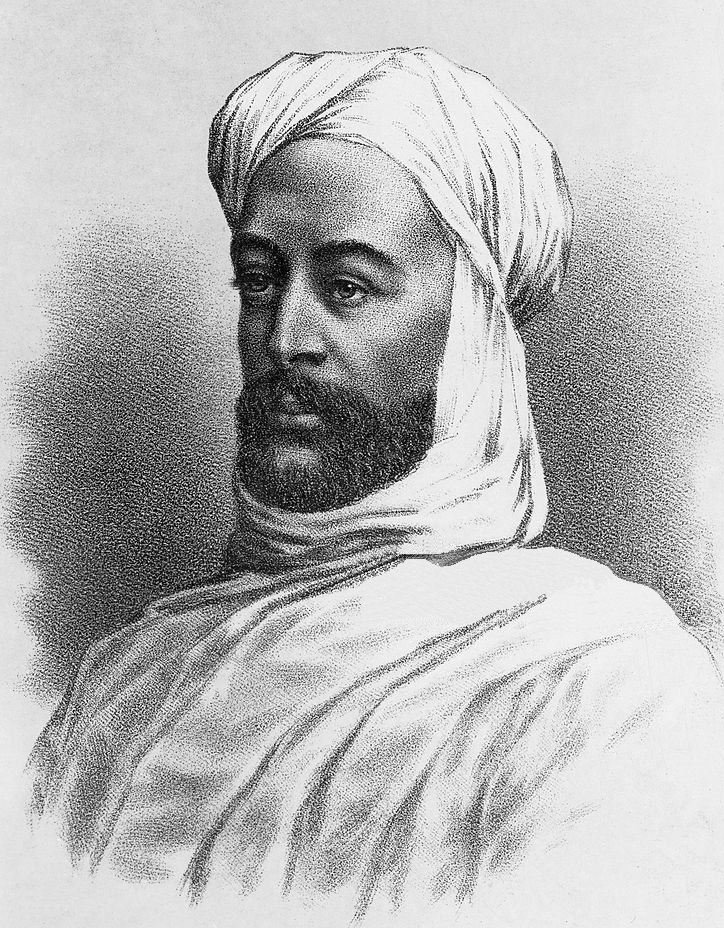
On this day, 127 years ago, Sudan became independent for the first
time as Khartoum was freed from the grip of British and Egyptian
forces after a battle known as the battle of Khartoum.
The liberators were the Mahdist Sudanese army led by Muhammad
Ahmad (Al Mahdi), Sudan's first contemporary leader.
Sudan's history shows that many powerful kingdoms and one of the
oldest civilizations in the world were born in Sudan. Egypt's rival in
Africa, Nubia, was powerful for thousands of years, but it had become
a weak kingdom by the end of the 18th century. So did the kingdom of
Sennar which ruled a large part of Central Sudan and spread into Chad
and other countries.The collapse of powerful kingdoms in Sudan
attracted the Ottomans who invaded Sudan and annexed it into the
Ottoman empire in 1820.
In 1881, the Sudanese rebelled against the Ottoman administration and
Sudan became independent, but the British were eyeing the country at
the time.
The British invaded Sudan in 1882, but they didn't govern it until
1899 when they finally defeated the Mahdist forces.
Charles "Chinese" Gordon who was a famous figure in England was
brought over from China to gain control of Sudan. He cited the
founding of an Islamic state at the hands of the Mahdi as a reason for
the need to invest in defeating the Mahdist army.
Gordon believed that he can accomplish this mission, however, the
Mahdi army proved to be strong and sieged the city of Khartoum from
March 1884 to January 1885.
The siege was brutal that it caused the food supply in Khartoum and of
Gordon's garrison to run low. The entire garrison was killed and
Gordon was shot and his head cut-off.
Muhamed Ahmad became the ruler of Sudan , but he died 5 months after
the battle , however, a modern Sudan was born.
In late 1898, in another attack led by Lord Kitchener, the Mahdist
army were defeated in what came to be known as the battle of Omdurman.
The battle of Khartoum became popular as it was chronicled in the 1966
film, Khartoum, and in the novel "Desert and Wilderness" by Polish
Nobel Prize winner Henryk Sienkiewicz.
Thursday, January 5, 2012
Published:Sudan shuts third newspaper in media crackdown
Sudanese security officials on Sunday evening confiscated Monday copies of Rai Al Shab,the third newspaper to be suspended in recent months by the government.
Rai Al Shab (The People's Opinion) is published by the Popular Congress Party (PCP), one of Sudan's largest opposition parties.
Known for its outspoken editorials and uncompromising journalism, the newspaper has been suspended many times in recent years, most recently from May 2010 to October 2011.
The pro-government Sudanese Media Center (SMC) quoted the head of the Media Department at the National Intelligence and Security Services (NISS) saying that the newspaper violated Sudan's "professional and ethical standards,"
The NISS has arrested many journalists last year including nine working with Radio Darfur. Also arrested was Abu Zar Al Ameen, the deputy editor-in-chief of Rai AlShab, who was released after more than a year in detention. The cases provoked an international outcry.
"The officers came to the our premises after 5 pm and they occupied the place; the editor-in-chief asked us to gather our personal belongings and leave," said Mustafa Ibrahim, one of the journalists working at Rai Al Shab.
Trial
Ibrahim added that at least 15,000 copies of the newspaper were confiscated on Sunday night. In recent months, copies of independent newspapers have been confiscated in an attempt to harm the newspapers that depend on sales since many opposition newspaper struggle to get advertisements.
Last week, a journalist working at the newspaper was called for interrogation at the National Press and Publications Council following two news pieces he published, in November and December respectively.
"I was surprised to find an arrest warrant waiting for me, I was interrogated before my release on bail," said Ahmed Haroun, who spoke to to Africa Review.
His case is ongoing; a trial hearing is yet to be set.
"During his Independence Day speech, the president spoke about freedoms such as press freedoms, then came the decision to suspend our publication," said Ibrahim who added that the decision will affect about 50 journalists, editors and staff members.
In July, six newspapers owned or co-owned by South Sudanese were suspended including the popular opposition newspaper, Ahjras Al Hurriya, and in September, Al Jareeda, a daily independent newspaper was suspended
Published @http://www.africareview.com/News/Sudan+shuts+third+newspaper+in+media+crackdown/-/979180/1299942/-/15qi875z/-/index.html
Rai Al Shab (The People's Opinion) is published by the Popular Congress Party (PCP), one of Sudan's largest opposition parties.
Known for its outspoken editorials and uncompromising journalism, the newspaper has been suspended many times in recent years, most recently from May 2010 to October 2011.
The pro-government Sudanese Media Center (SMC) quoted the head of the Media Department at the National Intelligence and Security Services (NISS) saying that the newspaper violated Sudan's "professional and ethical standards,"
The NISS has arrested many journalists last year including nine working with Radio Darfur. Also arrested was Abu Zar Al Ameen, the deputy editor-in-chief of Rai AlShab, who was released after more than a year in detention. The cases provoked an international outcry.
"The officers came to the our premises after 5 pm and they occupied the place; the editor-in-chief asked us to gather our personal belongings and leave," said Mustafa Ibrahim, one of the journalists working at Rai Al Shab.
Trial
Ibrahim added that at least 15,000 copies of the newspaper were confiscated on Sunday night. In recent months, copies of independent newspapers have been confiscated in an attempt to harm the newspapers that depend on sales since many opposition newspaper struggle to get advertisements.
Last week, a journalist working at the newspaper was called for interrogation at the National Press and Publications Council following two news pieces he published, in November and December respectively.
"I was surprised to find an arrest warrant waiting for me, I was interrogated before my release on bail," said Ahmed Haroun, who spoke to to Africa Review.
His case is ongoing; a trial hearing is yet to be set.
"During his Independence Day speech, the president spoke about freedoms such as press freedoms, then came the decision to suspend our publication," said Ibrahim who added that the decision will affect about 50 journalists, editors and staff members.
In July, six newspapers owned or co-owned by South Sudanese were suspended including the popular opposition newspaper, Ahjras Al Hurriya, and in September, Al Jareeda, a daily independent newspaper was suspended
Published @http://www.africareview.com/News/Sudan+shuts+third+newspaper+in+media+crackdown/-/979180/1299942/-/15qi875z/-/index.html
Sunday, December 25, 2011
Why the North is Silent
-I would like to thank S.O and A.A for contributing to this article and engaging in long discussions with me.
-I tried publishing this article in an attempt to get more feedback...to no avail :)
Definition of the North: in this article the North refers to Central and North Sudan. Usually seen as one entity by the rest of the country, but in fact, it is a divided region where the Nubians feel marginalized by the Ja'alyeen and Shaigiya of River Nile state. However, inter-marriages and Arabization have helped unite the region in recent decades.
The Sudanese people have it much worse than their North African counterparts, but why is the entire population not out in the streets chanting "the people want to overthrow the government"?
Social media activists have jokingly said that the Arab Spring will not reach Sudan simply because we don't have this season in Sudan, but as I'm glued to Al-Jazeera and Twitter trying to stay up to date with the Arab Spring that continues to unfold, I stop thinking of the four seasons and my mind goes back to 2005 in an attempt to understand the silence in Khartoum.
It was a bright day for Sudan when John Garang became Sudan's First Vice President in July 2005. He was going to run for presidency and I was going to vote for him. Even my grandmother who hails from the Ja'aliya strong-hold town of Berber stated that he is her candidate of choice.
He was single-handedly going to change Sudan, we believed. He was a charismatic leader who was going to unite a battered country. Three weeks later, he died in a plane crash and my hopes and Sudan's unity were buried with him. In the week following his death, Sudan's ethnic divisions became even more obvious. We watched as Southern Sudanese youth believing that the plane crash was not an accident engaged in violent riots, looting and vandalizing office windows and businesses. Clashes ensued with security forces and individuals believed to be of Northern Sudanese origin.
The conflict for the first time came to Khartoum, the capital of Sudan and the center of dominance and dominant tribes. For the first time, Northern Sudanese were the ones being attacked and for the first time, we asked the naive American question of post-9/11, Why do they hate us so much?
There was no time to assess the situation. If Sudan was a household, we spent the next week silent at the dinner table until we forgot what happened, or pushed it to the back of our minds.
Fast-forward to May 2008 when the Justice and Equality Movement (JEM) forces launched an attack to overthrow the Sudanese government. The attack which culminated in street fights in Omdurman, the national capital and one of Khartoum's twin cities, sent chills through the spine of North Sudan.
Suddenly, people started thinking about the periphery and trying to revisit earlier events to try to understand the rift between Central Sudan and the rest of Sudan. Estimates show us that not less than 400,000 lost their lives in Darfur, but Darfur was not a reality until it came to Khartoum.
The JEM attack helped start a dialogue about Darfur and the marginalization of the regions outside River Nile state in trying to understand why the periphery revolted.
Those two incidents have, in our opinion, inspired more North Sudanese support for the government as they cuddled around the government for protection.
Even months after secession, there is fear in Sudan's heartland. People are aware of the struggles in the periphery and are aware that the government's policies have created downright resentment and have bred grudges from Nyala to Damazin, from Kadugli to Suakin.
When a few weeks ago, 3 Darfur movements and the SPLM-North Faction announced the creation of an alliance (later joined by the Beja Congress) called the Sudan Revolutionary Front. Once again, people in Khartoum started speaking of a bitter periphery that is not only resentful of the government but also of the Northern people. Reactions to the alliance sparked two perspectives within the North.
Firstly, Khartoum needs to revolt as soon as possible to show the periphery that it seriously wants change that is in favor of democracy and equality and is adamant on preserving the rest of Sudan in light of the recent secession. The revolt will also be peaceful as opposed to an armed revolt that it pushed forward by the SRF.
Secondly, as a people we simply need to support the government because any change brought about by the SRF will be against Sudanese hailing from North/Central. They will be disfranchised and persecuted for the policies of successive governments.
- It is a fact that the North is a powerful constituency, it has an abundant amount of wealth and as a result of education opportunities, Northerners were able to immigrate to rich gulf-countries and the west and were able to generate more wealth than others. However, it is also a fact that anyone not in a position of power or related to someone powerful in Sudan is marginalized. You do not have fair access to jobs and other opportunities if you are not NCP. If this struggle is evident for Northerners, people from other regions have even more poignant struggles and this is why the North needs to revolt. It needs to stand up for Sudan as a whole; it needs to stand up against the government with the rest of Sudan. Hundreds of thousands protested in Mahalla Al Kobra in Egypt in 2007 and 2008, but the protests only gained momentum when they reached Tahrir, in downtown Cairo. The revolution needs to start in Khartoum, in the national capital and the heartland of Sudan's power and wealth and it needs to represent Sudan's search not only for democracy, but most importantly for social justice.
If it was just about overthrowing the government, then Egyptians would have left Tahrir in February and moved on with their lives. They could have entrusted the military with their revolution and waited for the elections. But they did not. They are now in Tahrir, losing their eyes and sacrificing their lives for total change and to be freed of a military rule? And why is that?
After overthrowing the Mubarak regime, they realized that the pursuit of social justice and democracy is not limited to removing a military dictatorship. If Egypt is ever going to have a proper democracy, it needs to have a civilian government and the military has controlled Egypt since its 1952 revolution. As we learn from Tahrir, we need to realize that Sudan doesn’t need an armed revolt, it needs a peaceful revolt. It needs a Tahrir moment followed by a civilian government. The military should be respected for its responsibilities, 1-to fight an invading army 2- to help the government during natural disasters.
On the other hand, the SRF wants an armed revolt to overthrow the government and take over power. We tell you, an armed liberation movement like the SRF is exactly like a military dictatorship with a better name. There is vast amount of literature opposing armed struggles as liberation movements capable of bringing about change. They end up growing into repressive dictatorships. This is the last thing needed in Sudan. If the SRF is made up of movements interested in improving the quality of life for their respective citizens and acquiring fair political representation, then they need to support a peaceful revolt in Khartoum and beyond.
Moving on to the second debate, it is important to note that the fears harbored by the Northern-Central Sudanese population are exacerbated by the government, the media and sadly, the periphery. In the opinion pieces published by Sudan Tribune, the opposition and JEM-affiliates seem to harbor anti-Northern sentiments.
In a recently published opinion piece entitled: The Sudanese Revolutionary Front- Right Way to the United and New Sudan. The author started off by discussing some misconceptions about the "Arab North", but ultimately ended up doing the same mistake as all the others he's criticizing. He started off by saying that the often misunderstood problem in Sudan is essentially a problem of racism implanted by a discriminating regime, and that the people of Khartoum themselves (often vilified in media) are victims of such a misconception. Agreed. However, he goes on to make the same mistake by singling out and targeting the “people of River Nile State” and accusing them of amplifying and imposing their 'Arab history and origins' on all of Sudan. We are wary of that approach as it just perpetuates this whole Arab North vs. Rest of Sudan dilemma. Sudan has tribal issues, however, we do not think that the Sudanese population want to disenfranchise any specific tribe economically or politically. It's a matter of social tribalism that has been inflated by this current regime and not the people of River Nile State and could be assuaged by a visionary leader/party who has the interest of the whole country at heart.
Hope and Change
As a conscious group of authors, we seriously doubt that the NCP is capable of reforms. Years of trying to negotiate with the NCP have been a total waste of time. The end result, usually a hefty publication with guidelines on how to end Sudan's disasters, is stored in a drawer or is somewhere gathering dust on a shelf. The NCP is interested in staying in power and if dialogue buys them time, they would engage in it for this reason, not because they are interested in changing their policies.
It is sad that under the NCP's watch, Sudan lost 25% of its population, it is even sadder that so far, it is not learning from its mistakes. This is why Sudan needs change; Sudan needs CPR in the form of a revolution. Only a regime-change will put it on the right track, to solving its internal conflicts and transitioning into a proper state instead of a governmental company where ministries and institutes are businesses.
-I tried publishing this article in an attempt to get more feedback...to no avail :)
Definition of the North: in this article the North refers to Central and North Sudan. Usually seen as one entity by the rest of the country, but in fact, it is a divided region where the Nubians feel marginalized by the Ja'alyeen and Shaigiya of River Nile state. However, inter-marriages and Arabization have helped unite the region in recent decades.
The Sudanese people have it much worse than their North African counterparts, but why is the entire population not out in the streets chanting "the people want to overthrow the government"?
Social media activists have jokingly said that the Arab Spring will not reach Sudan simply because we don't have this season in Sudan, but as I'm glued to Al-Jazeera and Twitter trying to stay up to date with the Arab Spring that continues to unfold, I stop thinking of the four seasons and my mind goes back to 2005 in an attempt to understand the silence in Khartoum.
It was a bright day for Sudan when John Garang became Sudan's First Vice President in July 2005. He was going to run for presidency and I was going to vote for him. Even my grandmother who hails from the Ja'aliya strong-hold town of Berber stated that he is her candidate of choice.
He was single-handedly going to change Sudan, we believed. He was a charismatic leader who was going to unite a battered country. Three weeks later, he died in a plane crash and my hopes and Sudan's unity were buried with him. In the week following his death, Sudan's ethnic divisions became even more obvious. We watched as Southern Sudanese youth believing that the plane crash was not an accident engaged in violent riots, looting and vandalizing office windows and businesses. Clashes ensued with security forces and individuals believed to be of Northern Sudanese origin.
The conflict for the first time came to Khartoum, the capital of Sudan and the center of dominance and dominant tribes. For the first time, Northern Sudanese were the ones being attacked and for the first time, we asked the naive American question of post-9/11, Why do they hate us so much?
There was no time to assess the situation. If Sudan was a household, we spent the next week silent at the dinner table until we forgot what happened, or pushed it to the back of our minds.
Fast-forward to May 2008 when the Justice and Equality Movement (JEM) forces launched an attack to overthrow the Sudanese government. The attack which culminated in street fights in Omdurman, the national capital and one of Khartoum's twin cities, sent chills through the spine of North Sudan.
Suddenly, people started thinking about the periphery and trying to revisit earlier events to try to understand the rift between Central Sudan and the rest of Sudan. Estimates show us that not less than 400,000 lost their lives in Darfur, but Darfur was not a reality until it came to Khartoum.
The JEM attack helped start a dialogue about Darfur and the marginalization of the regions outside River Nile state in trying to understand why the periphery revolted.
Those two incidents have, in our opinion, inspired more North Sudanese support for the government as they cuddled around the government for protection.
Even months after secession, there is fear in Sudan's heartland. People are aware of the struggles in the periphery and are aware that the government's policies have created downright resentment and have bred grudges from Nyala to Damazin, from Kadugli to Suakin.
When a few weeks ago, 3 Darfur movements and the SPLM-North Faction announced the creation of an alliance (later joined by the Beja Congress) called the Sudan Revolutionary Front. Once again, people in Khartoum started speaking of a bitter periphery that is not only resentful of the government but also of the Northern people. Reactions to the alliance sparked two perspectives within the North.
Firstly, Khartoum needs to revolt as soon as possible to show the periphery that it seriously wants change that is in favor of democracy and equality and is adamant on preserving the rest of Sudan in light of the recent secession. The revolt will also be peaceful as opposed to an armed revolt that it pushed forward by the SRF.
Secondly, as a people we simply need to support the government because any change brought about by the SRF will be against Sudanese hailing from North/Central. They will be disfranchised and persecuted for the policies of successive governments.
- It is a fact that the North is a powerful constituency, it has an abundant amount of wealth and as a result of education opportunities, Northerners were able to immigrate to rich gulf-countries and the west and were able to generate more wealth than others. However, it is also a fact that anyone not in a position of power or related to someone powerful in Sudan is marginalized. You do not have fair access to jobs and other opportunities if you are not NCP. If this struggle is evident for Northerners, people from other regions have even more poignant struggles and this is why the North needs to revolt. It needs to stand up for Sudan as a whole; it needs to stand up against the government with the rest of Sudan. Hundreds of thousands protested in Mahalla Al Kobra in Egypt in 2007 and 2008, but the protests only gained momentum when they reached Tahrir, in downtown Cairo. The revolution needs to start in Khartoum, in the national capital and the heartland of Sudan's power and wealth and it needs to represent Sudan's search not only for democracy, but most importantly for social justice.
If it was just about overthrowing the government, then Egyptians would have left Tahrir in February and moved on with their lives. They could have entrusted the military with their revolution and waited for the elections. But they did not. They are now in Tahrir, losing their eyes and sacrificing their lives for total change and to be freed of a military rule? And why is that?
After overthrowing the Mubarak regime, they realized that the pursuit of social justice and democracy is not limited to removing a military dictatorship. If Egypt is ever going to have a proper democracy, it needs to have a civilian government and the military has controlled Egypt since its 1952 revolution. As we learn from Tahrir, we need to realize that Sudan doesn’t need an armed revolt, it needs a peaceful revolt. It needs a Tahrir moment followed by a civilian government. The military should be respected for its responsibilities, 1-to fight an invading army 2- to help the government during natural disasters.
On the other hand, the SRF wants an armed revolt to overthrow the government and take over power. We tell you, an armed liberation movement like the SRF is exactly like a military dictatorship with a better name. There is vast amount of literature opposing armed struggles as liberation movements capable of bringing about change. They end up growing into repressive dictatorships. This is the last thing needed in Sudan. If the SRF is made up of movements interested in improving the quality of life for their respective citizens and acquiring fair political representation, then they need to support a peaceful revolt in Khartoum and beyond.
Moving on to the second debate, it is important to note that the fears harbored by the Northern-Central Sudanese population are exacerbated by the government, the media and sadly, the periphery. In the opinion pieces published by Sudan Tribune, the opposition and JEM-affiliates seem to harbor anti-Northern sentiments.
In a recently published opinion piece entitled: The Sudanese Revolutionary Front- Right Way to the United and New Sudan. The author started off by discussing some misconceptions about the "Arab North", but ultimately ended up doing the same mistake as all the others he's criticizing. He started off by saying that the often misunderstood problem in Sudan is essentially a problem of racism implanted by a discriminating regime, and that the people of Khartoum themselves (often vilified in media) are victims of such a misconception. Agreed. However, he goes on to make the same mistake by singling out and targeting the “people of River Nile State” and accusing them of amplifying and imposing their 'Arab history and origins' on all of Sudan. We are wary of that approach as it just perpetuates this whole Arab North vs. Rest of Sudan dilemma. Sudan has tribal issues, however, we do not think that the Sudanese population want to disenfranchise any specific tribe economically or politically. It's a matter of social tribalism that has been inflated by this current regime and not the people of River Nile State and could be assuaged by a visionary leader/party who has the interest of the whole country at heart.
Hope and Change
As a conscious group of authors, we seriously doubt that the NCP is capable of reforms. Years of trying to negotiate with the NCP have been a total waste of time. The end result, usually a hefty publication with guidelines on how to end Sudan's disasters, is stored in a drawer or is somewhere gathering dust on a shelf. The NCP is interested in staying in power and if dialogue buys them time, they would engage in it for this reason, not because they are interested in changing their policies.
It is sad that under the NCP's watch, Sudan lost 25% of its population, it is even sadder that so far, it is not learning from its mistakes. This is why Sudan needs change; Sudan needs CPR in the form of a revolution. Only a regime-change will put it on the right track, to solving its internal conflicts and transitioning into a proper state instead of a governmental company where ministries and institutes are businesses.
Sunday, December 18, 2011
Kenya and Sudan headed for showdown as deadline looms
*I contributed to this report
By FRED OLUOCH
Posted Monday, December 12 2011 at 00:00
With the two-week ultimatum given by Khartoum edging closer and the UN tightening sanctions against Asmara over the latter’s support for Al Shabaab, there is a growing feeling that Kenya needs to rethink its foreign policy.
The Kenya government’s reaction to strong protests by Sudan following a court ruling ordering the arrest of President Omar al-Bashir if he sets foot in Kenya, has revealed major flaws in that foreign policy.
Attorney-General Githu Muigai has appealed against the ruling, but an adjudication is unlikely to come before the expiry of the two-week ultimatum, raising the prospect that Sudan could sever relations with Kenya.
Historically, Kenya has operated on the principle of non-interference in its neighbours’ affairs, and its foreign policy depended largely on the whims of the person in power. Now, Kenya seems to have shifted to a policy of “non-indifference” to events in the region and encouraging its representatives abroad to pursue business-oriented diplomacy.
Kenya appears not to have been fully satisfied with the additional sanctions that the United Nations Security Council imposed on Eritrea on Tuesday. The draft resolution received 13 votes in favour, none against and two abstentions from China and Russia.
“We have no problem with Eritrea. It is Eritrea that has a problem with every country in the region. But I have been communicating with their representative in Kenya and Eritrea maintains that it has no intention of severing links with Kenya since the issues can be solved amicably,” he said.
Kenya in November accused Eritrea of flying two planeloads of arms to Al Shabaab-held positions in Somalia, a charge that Asmara vigorously denied. Kenya then hinted it might review diplomatic ties with Eritrea if it turned out the Red sea country was arming the Al Qaeda-linked Shabaab militants who are currently fighting Kenyan forces in the south of Somalia.
On the other hand, Eritrean government officials hinted that Kenya is being influenced by the propaganda of their archenemy Ethiopia, with whom they fought a two-year war over the disputed border region of Badme.
Last week, Ethiopian Prime Minister Meles Zenawi, insisted that Eritrea was a prime source of instability for the whole region. Apart from the 1998-200 war, Ethiopia remains uncomfortable with Eritrea over its allegedly close ties with Ethiopian rebel groups like the Oromo Liberation Front and the Ogaden National Liberation Front
Dr Ben Sihanya, a lecturer on international law at the University of Nairobi, argued that Kenya took the right decision by appealing to the UN over Eritrea, but the onus is on Kenya to provide evidence.
He, however, believes that the diplomatic row with Eritrea and Sudan goes to show that Kenya needs a consistent foreign policy regarding it interests in the region.
“This is the time to formulate a new foreign policy based on the new Constitution and international treaties we have signed. We need more detailed and consistent foreign policy because previously our foreign policy has been reactionary,” he said.
President Bashir gave Kenya two weeks to resolve the situation in his favour or face punitive measures, which will include cutting trade and diplomatic ties and banning planes leaving or bound for Kenya from over-flying Sudanese airspace. Other measures include throwing out about 1,500 Kenyans working in Sudan.
Since the issuance of his arrest warrant, Sudan’s president has visited Chad, Kenya, Djibouti and Malawi —all members of the ICC.
Faisal Mohamed Salih, a writer and human-rights activist in Sudan, believes that Kenya’s decision to avoid political confrontation with the Sudanese government is primarily due to the ongoing internal debate on the ICC’s intervention in Kenya following its post-election violence.
“Not all sides in Kenya support the ICC’s court case against Kenyan officials; also, some Kenyan officials fear being indicted and suffering the same fate as Sudan’s president. This explains their attempt to calm down the situation,” said Mr Salih. Dr Al Tayeb Zain Al Abdeen who teaches political science at the University of Khartoum, questioned the court’s ability to conduct the actual arrest
“The court does not arrest, it collaborates with the police, which in all countries is part of the state,” said Dr Al Abdeen who added that in any case, President Bashir should not consider going to Nairobi at this time.
In October 2011, Malawi also came under fire from the international community and rights groups when it hosted President Bashir. In a statement to the ICC, Malawi said that “as a member of the African Union, (it) fully aligns itself with the position adopted by the African Union.”
Additional reporting by Reem Abbas
http://www.theeastafrican.co.ke/news/Kenya+and+Sudan+headed+for+showdown+as+deadline+looms/-/2558/1287178/-/item/1/-/j30d3oz/-/index.html
By FRED OLUOCH
Posted Monday, December 12 2011 at 00:00
With the two-week ultimatum given by Khartoum edging closer and the UN tightening sanctions against Asmara over the latter’s support for Al Shabaab, there is a growing feeling that Kenya needs to rethink its foreign policy.
The Kenya government’s reaction to strong protests by Sudan following a court ruling ordering the arrest of President Omar al-Bashir if he sets foot in Kenya, has revealed major flaws in that foreign policy.
Attorney-General Githu Muigai has appealed against the ruling, but an adjudication is unlikely to come before the expiry of the two-week ultimatum, raising the prospect that Sudan could sever relations with Kenya.
Historically, Kenya has operated on the principle of non-interference in its neighbours’ affairs, and its foreign policy depended largely on the whims of the person in power. Now, Kenya seems to have shifted to a policy of “non-indifference” to events in the region and encouraging its representatives abroad to pursue business-oriented diplomacy.
Kenya appears not to have been fully satisfied with the additional sanctions that the United Nations Security Council imposed on Eritrea on Tuesday. The draft resolution received 13 votes in favour, none against and two abstentions from China and Russia.
“We have no problem with Eritrea. It is Eritrea that has a problem with every country in the region. But I have been communicating with their representative in Kenya and Eritrea maintains that it has no intention of severing links with Kenya since the issues can be solved amicably,” he said.
Kenya in November accused Eritrea of flying two planeloads of arms to Al Shabaab-held positions in Somalia, a charge that Asmara vigorously denied. Kenya then hinted it might review diplomatic ties with Eritrea if it turned out the Red sea country was arming the Al Qaeda-linked Shabaab militants who are currently fighting Kenyan forces in the south of Somalia.
On the other hand, Eritrean government officials hinted that Kenya is being influenced by the propaganda of their archenemy Ethiopia, with whom they fought a two-year war over the disputed border region of Badme.
Last week, Ethiopian Prime Minister Meles Zenawi, insisted that Eritrea was a prime source of instability for the whole region. Apart from the 1998-200 war, Ethiopia remains uncomfortable with Eritrea over its allegedly close ties with Ethiopian rebel groups like the Oromo Liberation Front and the Ogaden National Liberation Front
Dr Ben Sihanya, a lecturer on international law at the University of Nairobi, argued that Kenya took the right decision by appealing to the UN over Eritrea, but the onus is on Kenya to provide evidence.
He, however, believes that the diplomatic row with Eritrea and Sudan goes to show that Kenya needs a consistent foreign policy regarding it interests in the region.
“This is the time to formulate a new foreign policy based on the new Constitution and international treaties we have signed. We need more detailed and consistent foreign policy because previously our foreign policy has been reactionary,” he said.
President Bashir gave Kenya two weeks to resolve the situation in his favour or face punitive measures, which will include cutting trade and diplomatic ties and banning planes leaving or bound for Kenya from over-flying Sudanese airspace. Other measures include throwing out about 1,500 Kenyans working in Sudan.
Since the issuance of his arrest warrant, Sudan’s president has visited Chad, Kenya, Djibouti and Malawi —all members of the ICC.
Faisal Mohamed Salih, a writer and human-rights activist in Sudan, believes that Kenya’s decision to avoid political confrontation with the Sudanese government is primarily due to the ongoing internal debate on the ICC’s intervention in Kenya following its post-election violence.
“Not all sides in Kenya support the ICC’s court case against Kenyan officials; also, some Kenyan officials fear being indicted and suffering the same fate as Sudan’s president. This explains their attempt to calm down the situation,” said Mr Salih. Dr Al Tayeb Zain Al Abdeen who teaches political science at the University of Khartoum, questioned the court’s ability to conduct the actual arrest
“The court does not arrest, it collaborates with the police, which in all countries is part of the state,” said Dr Al Abdeen who added that in any case, President Bashir should not consider going to Nairobi at this time.
In October 2011, Malawi also came under fire from the international community and rights groups when it hosted President Bashir. In a statement to the ICC, Malawi said that “as a member of the African Union, (it) fully aligns itself with the position adopted by the African Union.”
Additional reporting by Reem Abbas
http://www.theeastafrican.co.ke/news/Kenya+and+Sudan+headed+for+showdown+as+deadline+looms/-/2558/1287178/-/item/1/-/j30d3oz/-/index.html
Sunday, December 4, 2011
ام الناس- محمــد طـه القدال
The wonderful Mohamed Taha Al Gaddal, one of my favorite Sudanese poets wrote yet another masterpiece, Om Al Nas (the mother of the people). I managed to get the CD last week in an event in commemoration of "the 16 Days of Activism Against Gender Violence"
You can now listen to Om Al Nas performed in the form of 4 different songs by Amal Al Nour and Asrar Babiker and others.
اوبريت ام الناس عمل من انتاج مركز سالمة لمصادر ودراسات المرأة صندوق الامم المتحده لدعم المرأة حركه تمكين المرأه من اجل السلام
اوبريت ام الناس من كلمانت الاستاذ محمد طه القدال
الحان وتوزيع موسيقي الاستاذ سعد الدين
http://www.youtube.com/watch?v=8zZ5YmIOpz4
http://www.youtube.com/watch?v=USsA3k9Gu7Y
You can now listen to Om Al Nas performed in the form of 4 different songs by Amal Al Nour and Asrar Babiker and others.
اوبريت ام الناس عمل من انتاج مركز سالمة لمصادر ودراسات المرأة صندوق الامم المتحده لدعم المرأة حركه تمكين المرأه من اجل السلام
اوبريت ام الناس من كلمانت الاستاذ محمد طه القدال
الحان وتوزيع موسيقي الاستاذ سعد الدين
http://www.youtube.com/watch?v=8zZ5YmIOpz4
http://www.youtube.com/watch?v=USsA3k9Gu7Y
Subscribe to:
Posts (Atom)