Friday, February 17, 2012

Youth groups pressure Sudan government over rape and torture


Last January, as South Sudanese overwhelmingly voted for secession, what remained of Sudan was going through political and social transformation. There had been small-scale protests since the government of Omar Al Bashir, a military dictatorship, took over in June 1989 but January 2011 was different.

Not only did the 2011 protests call for change, they also encompassed a wider range issues affecting the Sudanese public.

When youth movements began emerging in 2011, they attracted the upper middle class, a section of society that had earlier distanced itself from the national issue and politics.

In December 2010, the Tunisian revolution took off and the government was overthrown, the following month calls on social media websites such as Facebook for change were getting louder in Sudan. As the revolution was unfolding in Egypt,the calls for mass protests became heard.

The protests were led by youth groups, notably Girifna (We are Fed Up) and Youth for Change (known as Sharara). Girifna was founded in late 2009 and was mobilizing the public against the ruling party before and during the Sudanese elections in April 2010.

It was founded by students and young activists who were fed-up with the government and wanted change. From day one, Girifna called for the overthrow of the Sudanese government through peaceful and non-violence means. The group communicates at the grass root level through public debates and events and also in the virtual world through its Facebook groups, twitter, Youtube channels and a regularly updated website.

Youth for Change (also known as Sharara) began in 2010 and has gained popularity through its heavy online presence and organizing the January 2011 protests known as the “2011 revolution protests”.

One of their Facebook events for the protest managed to attract over 10,000 youth.

H.K, a young university student joined the Jan 30 protest.

“I took food and clothes with me in a bag and put them in the trunk of my car, I was prepared to stay the night, we wanted it to become a Tahrir square,” said H.K

There were ongoing changes on the meeting points as organizers chose streets instead of a big square like Jackson square which made protestors an easier target as police forces surrounded them and blocked side streets. Amnesty international said that at least 150 protestors were arrested.

Many youth were detained for a few days to about two weeks. Some reported torture and even sexual assault at the custody of the police forces.

A young activist arrested in Khartoum North in January 2011 reported beatings, electrocutions, sleep deprivation and other horrendous forms of torture. He was kept there for nearly 50 days and came out with a chronic back injury and complaints about his knees.

In mid-February as other protests were taking place in Khartoum and its twin cities, Safia Ishaq, a young female activist affiliated with Girifna was kidnapped by a number of men and taken to one of the security services premises.

In a case that has received public outcry, Ishaq released a testimony that was published in late February last year. She states that she was gang-rapped by three security men who also beat her, insulted her and later dumped her on the side of a road.

She recorded a video where she told her story and subsequently became the first Sudanese woman to publicly come out and speak about sexual assault by the Security organ. The video has attracted over 100,000 views so far. After the incident, Ishaq had to flee Sudan as the security service was looking for her for speaking out against the sexual assault.

Girifna continue to raise the issue of rape of Ishaq and call for justice for all sexual violence that has been committed by Sudanese security forces against many Sudanese women.

“A year ago, a young Sudanese woman was violated and many more women were silenced through fear of sexual assault. Many people stood by her side and continue to face consequences for that,” read a statement from the the group, “we will never forget Safia. We will continue to peacefully resist the current regime and after Sudan’s revolution, we will push for a fair investigation and hold her rapists accountable”

Girifna has also petitioned the government of Sudan over detentions of activists affiliated to their group. Most youth activists are being held incommunicado for weeks and in some cases months.

In January 2012, at least 10 activists from Girifna and Youth for Change were arrested and detained from a few days to up to two weeks. Other students and youth activists such as Taj Al Sir Gaafar, Muhammed Idris Jeddo and Ibrahim Majzoub remain in detention since December 2011.

published @ http://ch16.org/2012/02/13/youth-groups-pressure-sudan-government-over-rape-and-torture/

Sudanese activist admitted to hospital in critical condition

Ibrahim Ali Majzoub, a 25-year-old Sudanese activist with the Girifna (We are Fed Up) movement and the Democratic Unionist Party, has been transferred from Kober Prison in Khartoum North, to a hospital nearby, said a family friend.

Mr Majzoub was arrested in early January by the National Intelligence and Security Services (NISS) while addressing a crowd over Manasir displacement issue at Wadi Al Neel University in River Nile State, some 300km from Khartoum.

He was detained before being transferred to Kober where he was neither charged nor tried.

"His parents went to the hospital to visit him and his mother could not recognise him," said a family friend who requested to be identified only by initials R.S.

Girifna, a youth group he is involved with, found out that he had an appendix operation while in detention and had been in pain since the operation.

He was currently at the NISS organ's hospital and was reportedly in a critical condition.

Another youth activist, Taj Al Sir Gaafar, also affiliated with the Girifna and opposition party Haq, was on day five of his hunger strike.

Gaafar was protesting his detention since December 30 last year, without a trial.

Civil resistance

A student of University of Khartoum, Gaafar mobilised over 10,000 colleagues in a protest and subsequent sit-in which led to the closure of the university late December.

Another youth activist, Muhammad Idris Jeddo ,who formerly headed the Darfur Association of Students at the University of Khartoum, was also arrested last December.

Jeddo, whose detention sparked a protest inside one of the dorms, was held at Kober Prison pending trial or charges.

His friend, who requested not to be named, told the Africa Review that he was also kidnapped from a bus at gun point.

"When we asked about him, the security services told us that he will not be released until the protest at the University of Khartoum is called off," said the friend.

There has a crackdown on youth activists and students since December 2011 as a result of on-going protests at universities all over Sudan.

Youth activists have been more vocal in calling for regime-change and civil resistance in recent months in light of the Arab Spring in neighbouring countries.

Last week, six activists from Girifna were released after a two-week detention at Kober prison, following an event they organised to discuss the developmental and the human rights situation in eastern Sudan.


published @ http://www.africareview.com/News/Sudanese+activist+admitted+to+hospital+in+critical+condition/-/979180/1328832/-/lxdtcw/-/index.html

University of Khartoum raid; Sudan govt takes suppression to new level


KHARTOUM: About 500 University of Khartoum students were beaten with batons, forced out of the dorms into police trucks and detained at 4 a.m today following a raid on the dorms. I received a message from a student activist and student from the dorm at 9 a.m. telling me that he was arrested and is kept at the Souq Mahali police station in Khartoum with friends.

Volunteer lawyers and activists are currently working on securing their releasing students on bail. Students could face charges ranging from “causing public nuisance” and “disturbing public safety” which they could be made to face in court. A lawyer has said that some students were released on bail, but it is still unclear whether they are able to go back to the dorms.

The Sudan government has been cracking down on activism on the university for a while. On 22 December 2011, at least 700 students from the University of Khartoum marched on a solidarity protest with Manasir students to protest the lack of action on the Manasir cause. The Manasir, an ethnic group from Northern Sudan, has engaged in a sit-in strike, 300 km from Khartoum since November 2011 to protest their displacement as a result of the Merowe Dam and the lack of compensation.

Peaceful student protestors faced a heavy crackdown from the police forces. At least 70 students were arrested as a result and dorms were vandalized and raided by police forces on that same day.

On Sunday, 25th of December 2011, Khartoum University students began a week-long protest and sit-in that attracted anywhere between 10,000 to 16,000 students to protest police brutality, the administration’s position on the police forces entering the campus and arresting students and they also demanded that students are compensated for loses.

The sit-in was organized and attracted a lot of support from students who united on a common cause. However, on Thursday the 29th of December, the university administration announced that it would suspend studies until further notice.

Consequently the authorities closed down the university and arrested student activists such as Taj Al Sir Gaafar and Muhammed Idris Jeddo on 30 December 2011. The students remain in detention. The University of Khartoum was instrumental in the 1964 and the 1985 revolutions in Sudan.

There has been shrinking space for freedom of expression since Arab Spring uprisings in neighbouring North African nations began in late 2010. The government of Sudan has tightened the noose on youth and opposition groups that are calling for change as well as cracked down on independent media. Since July 2011, 8 newspapers have been suspended by the security forces. Many opposition parties have members in detention.

Since early 2011 when the Arab Spring began, opposition groups have publicly called for regime-change as the only way forward for Sudan. President Bashir who heads the current ruling party, the National Congress Party, came to power in 1989 after staging a military coup and overthrowing a democratically-elected government. Since then, Sudan has been embroiled in violent conflicts.

The Manasir strike is one of the grievances that are uniting the Sudanese populace in their search fro reform

Published: Sudan continues crackdown on voices of dissent

Published @ http://ch16.org/2012/02/02/sudan-continues-crackdown-on-voices-of-dissent/

KHARTOUM : The National Intelligence and Security Services (NISS) arrested twelve youth activists from the popular groups, Girifna (We are Fed Up) and Youth for Change over the last week in the Sudanese Capital Khartoum. Other members of Girifna are reportedly being pursued by security officials.

There has been shrinking space for freedom of expression since Arab Spring uprisings in neighbouring North African nations began in late 2010. The government of Sudan has tightened the noose on youth and opposition groups that are calling for change as well as cracked down on independent media. Since July 2011, 8 newspapers have been suspended by the security forces. Only two English newspapers are surviving in Sudan as five newspapers were suspended after the South Sudan secession in 2011.

Some newspapers like Rai Al Shab and Ahjras Al Hurriya were suspended for their affiliation with opposition parties while others Alwan, an independent newspaper was shut down under unclear circumstances.

Many opposition parties have members in detention. Dr. Bushra Gamar and Dr. Abdelmoniem Rahma, both from Sudan People’s Liberation Movement -North Faction (SPLM-N), a movement currently prohibited in Sudan, have been in detention since June and September, respectively.

Taj Al Sir Gaafar, a student at the University of Khartoum who belongs to the opposition movement, HAQ, has been in detention since December 2011. Calls for the release of the detainees have not yielded much action from President Omar Al Bashir’s government.

Since early 2011 when the Arab Spring began, opposition groups have publicly called for regime-change as the only way forward for Sudan. President Bashir who heads the current ruling party, the National Congress Party, came to power in 1989 after staging a military coup and overthrowing a democratically-elected government. Since then, Sudan has been embroiled in violent conflicts.

Currently Bashir’s government is fighting different rebel groups in different parts of the country. The government has also been accused of mismanaging billions of oil revenues. Sudan began exporting oil in the late 1990s, although a number of high-rise buildings were added to Khartoum’s skyline, little has changed for the majority of Sudanese citizens.

In January and February 2011 hundreds of Sudanese youth participated in an unprecedented wave of street demonstrations. It is estimated that at least 113 were arrested during those protests; some detainees including Girifna members reported abuse during detention. The youth were released, but some ahve reportedly been under surveillance after their release to monitor their political activities.

Khartoum has also seen protests against the alarming increase in commodity prices. The protests against high prices have spread to Kassala, a city in Eastern Sudan, where students held mass protests but faced a brutal crackdown far away from the national and international media eye.

In late 2011 there was a boycott on meat as people looked for different ways to beat the government crack down. Supermarkets that have previously had all products began stocking up on basic commodities and lessening their purchase of products now seen as luxury such as jam and tuna.

Sudan also faces continued protest by the Manasir, an ethnic group from Northern Sudan who have held a sit-in in River Nile State against displacement and lack of compensation as a result of the construction of the Merowe dam. The dam was built on Manasir land and directly displaced thousands of ethnic Manasir.

The government of Sudan defends the dam and is currently building two other controversial dams as an attempt to boost electricity supply to all parts of Sudan. Power cuts remain a daily reality for the 40 million citizens of Sudan. With all these protests the government has increased its highhandedness.


Students of Zalingei University (West Darfur) demonstrating in December 2010.

A Sudanese youth whom I spoke to but cannot mention because of their safety said they have been targeted.

” My friend and I ran out of his house when we noticed two cars parked outside. We ran down small alleyways while the cars tried to catch up with us,” said A.S who was forced to leave his house for security reasons on Friday. A.S also had to stop using his phone as it is bugged and could be used to track his movements.

Another female member of Girifna reported that her phone was bugged and her house is under constant surveillance by the NISS.

“When I went home after Wednesday’s event, I found an NISS vehicle and officers watching my house,” said R.S.

Members of the NISS are immune to trials and can detain activists for up to 9 months on the pretext of defending national security. Cases of torture were reported inside NISS premises, which are usually government-owned houses in residential neighborhoods.

This followed held on January 25 to commemorate the 7th anniversary of the Port Sudan massacre where at least 22 were killed and over 400 were injured following clashes between security and protestors asking for an end to the marginalization of Eastern Sudan. The event featured speakers from East Sudan to speak about the ongoing humanitarian crises and neglect there. Girifna has been working for change in Sudan since 2009.

All those detainees do not know their fate until a decision is taken by government and in some cases they are forced to sign documents promising to stop their political activities before release. In other cases, they have to go to court for charges ranging from public nuisance to conspiring against the state and cases usually drag on for a few months.

Commentators have asked when will the Arab spring reach Sudan, which is well, qualified looking at political and economic problems and ongoing humanitarian crises. The important question is not when the revolution will reach Sudan but in what form would it reach.

Last year, rebel groups from Darfur, South Kordofan and Blue Nile and even East Sudan joined forced and created the Sudan Revolutionary Front, which calls for an armed struggle to overthrow the government as an alternative. Although people in Central and Northern Sudan are keen on regime-change, there is still a divide between the advantaged Central and Northern Sudan and the marginalized other parts on how to bring about regime change.

Change in Sudan is inevitable, protests are ongoing but until Sudanese people from different groups unite, the government will continue to easily crash dissent and pit groups against others.

Saturday, January 28, 2012

Published:Sudan’s security service closes newspaper

Published @ http://uncut.indexoncensorship.org/2012/01/sudan-newspapers-censorship/

Sudan’s National Intelligence Security Services (NISS) suspended Alwan, an independent daily newspaper On Friday 13 January. On Thursday and Friday morning, copies of the newspaper were confiscated post-publication, but the editor-in-chief was only informed of the suspension on Friday.

Shadia Ahmad, a journalist with Alwan, said rumours suggest that a political interview published recently has instigated this harsh decision.

“This is what we are hearing, but so far the editor-in-chief has yet to receive the official written decision to suspend the newspaper which should have clear reasons,” said Ahmad.

Ahmad added that there are probably a number of reasons for the suspension, commenting that if it was only the interview which was to blame for the suspension, the journalist who wrote the article would have faced problems, rather than the newspaper.

Alwan faces charges under article 24, the responsibilities of editors, and article 26, the responsibilities of journalists, of the 2009 Press Laws.

The newspapere was closed down for almost two years in 2008 after publishing a report on a military operation. It came back a little over a year ago.

Earlier this month, the NISS suspended Rai Al Shaab, an opposition newspaper affiliated with the Popular Congress Party (PCP). The head of the NISS stated that Rai Al Shaab violated Sudan’s ” “professional and ethical standards,”

In early 2010, Rai Al Shaab’s deputy editor-in-chief was arrested, tortured and detained for over a year and it was shut down for a year and a half.

Since it began publishing again in October 2011, it has faced constant harassment from the NISS. Two weeks ago, officers raided the newspaper’s premises, confiscated equipment and occupied the offices.

Ahmed Haroun, a Rai Al Shaab journalist, said that he was called in for questioning before the suspension.

“I was interrogated about an article I wrote in November and I was released, but I still have to go to court,” said Haroun.

Lawyer Nabil Adib says that the closure of Rai Al Shaab is illegal.

“It does not abide by the constitution since they can not suspend it before the necessary measures are taken — as in having an actual trial,” said Adib who added that the penalty came before the trial.

Commenting on the recent re-launch of Al Jareeda, an independent newspaper that was suspended by the NISS last September, Adib stated that they are unlikely to publish the same daring material they used to publish before they were shut down.

In recent years, two decisions were instrumental in the new wave of crackdowns on press freedoms in Sudan. Firstly, the controversial 2009 press laws which allow the state to intervene in issues of national security; second, in 2010 the NISS was given many immunities and rights under the 2010 National Security Act. Through this act, the NISS is allowed to take action on issues of national security which range from detaining journalists for extended periods of time, suing journalists and subjecting them to hefty fines and even closing down newspapers.

Many high-profile journalists including Amal Habbani, Faisal Mohamed Salih, Dr Nahid Al Hassan and Dr Omer Al Garrai are still facing charges and ongoing trials for writing about the rape of Safia Ishaq, a young activist who was arrested after taking part in protests and raped by three security men while in detention.

“They aim to waste your time and stop your life” Amal Habbani commented on the lengthy trial.

Last month, Dr Nahid Al Hassan, a psychiatrist working with victims of sexual assault and abuse was told in court by the judge that evidence proves that Safia Ishaq was not raped.

“You jeopardised the people’s trust in the security forces by writing about an incident that never happened,” said Mudathir Al Rashid, a judge who is known as the “journalist cases judge” for taking up notorious cases against journalists.

26 January 1885- Khartoum


On this day, 127 years ago, Sudan became independent for the first
time as Khartoum was freed from the grip of British and Egyptian
forces after a battle known as the battle of Khartoum.

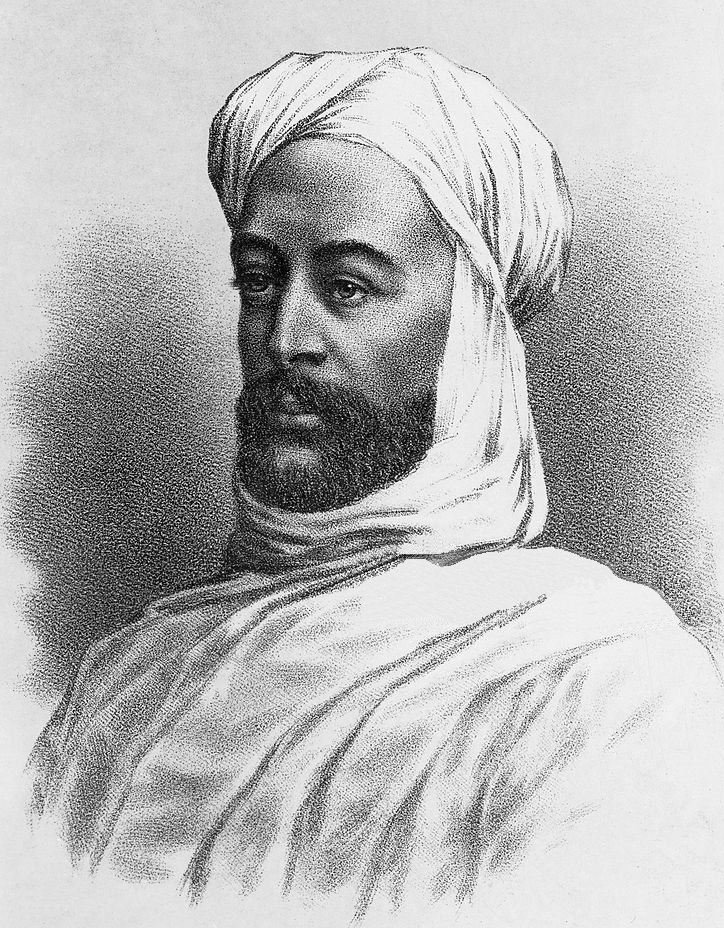
The liberators were the Mahdist Sudanese army led by Muhammad
Ahmad (Al Mahdi), Sudan's first contemporary leader.

Sudan's history shows that many powerful kingdoms and one of the
oldest civilizations in the world were born in Sudan. Egypt's rival in
Africa, Nubia, was powerful for thousands of years, but it had become
a weak kingdom by the end of the 18th century. So did the kingdom of
Sennar which ruled a large part of Central Sudan and spread into Chad
and other countries.The collapse of powerful kingdoms in Sudan
attracted the Ottomans who invaded Sudan and annexed it into the
Ottoman empire in 1820.

In 1881, the Sudanese rebelled against the Ottoman administration and
Sudan became independent, but the British were eyeing the country at
the time.

The British invaded Sudan in 1882, but they didn't govern it until
1899 when they finally defeated the Mahdist forces.

Charles "Chinese" Gordon who was a famous figure in England was
brought over from China to gain control of Sudan. He cited the
founding of an Islamic state at the hands of the Mahdi as a reason for
the need to invest in defeating the Mahdist army.

Gordon believed that he can accomplish this mission, however, the
Mahdi army proved to be strong and sieged the city of Khartoum from
March 1884 to January 1885.

The siege was brutal that it caused the food supply in Khartoum and of
Gordon's garrison to run low. The entire garrison was killed and
Gordon was shot and his head cut-off.

Muhamed Ahmad became the ruler of Sudan , but he died 5 months after
the battle , however, a modern Sudan was born.

In late 1898, in another attack led by Lord Kitchener, the Mahdist
army were defeated in what came to be known as the battle of Omdurman.

The battle of Khartoum became popular as it was chronicled in the 1966
film, Khartoum, and in the novel "Desert and Wilderness" by Polish
Nobel Prize winner Henryk Sienkiewicz.

Thursday, January 5, 2012

Published:Sudan shuts third newspaper in media crackdown

Sudanese security officials on Sunday evening confiscated Monday copies of Rai Al Shab,the third newspaper to be suspended in recent months by the government.

Rai Al Shab (The People's Opinion) is published by the Popular Congress Party (PCP), one of Sudan's largest opposition parties.

Known for its outspoken editorials and uncompromising journalism, the newspaper has been suspended many times in recent years, most recently from May 2010 to October 2011.

The pro-government Sudanese Media Center (SMC) quoted the head of the Media Department at the National Intelligence and Security Services (NISS) saying that the newspaper violated Sudan's "professional and ethical standards,"

The NISS has arrested many journalists last year including nine working with Radio Darfur. Also arrested was Abu Zar Al Ameen, the deputy editor-in-chief of Rai AlShab, who was released after more than a year in detention. The cases provoked an international outcry.


"The officers came to the our premises after 5 pm and they occupied the place; the editor-in-chief asked us to gather our personal belongings and leave," said Mustafa Ibrahim, one of the journalists working at Rai Al Shab.

Trial

Ibrahim added that at least 15,000 copies of the newspaper were confiscated on Sunday night. In recent months, copies of independent newspapers have been confiscated in an attempt to harm the newspapers that depend on sales since many opposition newspaper struggle to get advertisements.

Last week, a journalist working at the newspaper was called for interrogation at the National Press and Publications Council following two news pieces he published, in November and December respectively.

"I was surprised to find an arrest warrant waiting for me, I was interrogated before my release on bail," said Ahmed Haroun, who spoke to to Africa Review.

His case is ongoing; a trial hearing is yet to be set.

"During his Independence Day speech, the president spoke about freedoms such as press freedoms, then came the decision to suspend our publication," said Ibrahim who added that the decision will affect about 50 journalists, editors and staff members.

In July, six newspapers owned or co-owned by South Sudanese were suspended including the popular opposition newspaper, Ahjras Al Hurriya, and in September, Al Jareeda, a daily independent newspaper was suspended

Published @http://www.africareview.com/News/Sudan+shuts+third+newspaper+in+media+crackdown/-/979180/1299942/-/15qi875z/-/index.html